






Written by:

Medically Reviewed by:
Last Updated:
July 15th, 2026
“Meth mouth” is the name given to the tooth decay that affects people who abuse methamphetamine. It can leave teeth stained, crumbling, and in many cases, beyond saving. A major study examining the mouths of 571 methamphetamine users found that 96% had cavities, and 58% had untreated decay. Only 23% had retained all of their natural teeth, compared with 48% of the general population. Methamphetamine tooth decay happens because of what the drug does to your body and because of how it changes behaviour.
How meth affects teeth
To understand how meth destroys teeth, we first need to look at the role of saliva.
In a healthy mouth, saliva washes away food particles and neutralises the acids that bacteria produce. It also delivers minerals to your teeth that help repair early damage to enamel before it becomes permanent.
Methamphetamine interferes with all of these jobs. Meth stimulates the sympathetic nervous system, which causes your body to feel like it’s in its fight-or-flight response. One effect of this stimulation is a sharp reduction in saliva production, a condition known as xerostomia. A study comparing 100 chronic methamphetamine users with 100 matched controls found that 72% of the users reported dry mouth. Clinical testing also confirmed much lower saliva flow rates in the group using meth.
The dry mouth that meth use causes means there is not enough saliva to defend your mouth against decay. Acids produced by bacteria after they metabolise sugars are no longer being neutralised, and damaged enamel is no longer having its minerals replaced. The same study found that the saliva of methamphetamine users had a notably lower pH, meaning their mouths were more acidic than those of non-users. This creates an environment where decay can progress far more quickly than it otherwise would.
Bruxism and methamphetamine
One symptom of the intense nervous system stimulation meth causes is called bruxism. This is an involuntary grinding or clenching of your teeth. The same study of one hundred meth users found that 68% reported clenching their jaw. Clinical examination revealed far higher rates of tooth wear, visible enamel cracks, and exposed dentine. Nearly half of the users in the study also reported pain in the temporomandibular joint, which is the joint that connects your jaw to your skull.
With continued meth use, this grinding wears down your enamel. This creates cracks that allow bacteria to penetrate deeper into your teeth and can cause them to fracture. Combined with the weakening effect of acid exposure in a dry mouth, bruxism accelerates the destruction of already vulnerable teeth.
Behavioural factors for meth mouth
The effects of methamphetamine on behaviour make the physical damage worse. Meth produces a high that can last up to 12 hours, and some people stay awake for days without sleeping. During this time, oral hygiene may be neglected altogether.
At the same time, methamphetamine users frequently crave sugary foods and drinks. Research has found that chronic users consume an average of over 35 carbonated soft drinks per month, providing a constant supply of sugar for acid-producing bacteria. The combination of sugar, bacteria, dry mouth, and absent hygiene creates ideal conditions for rapid decay.
Methamphetamine also suppresses appetite, and many users eat very little while using the addictive drug. This means your body may struggle to maintain healthy gum tissue and repair damage.
How meth mouth develops
The progression of meth mouth generally goes the same for everyone, but how fast it happens depends on how much and how often you use meth.
In the early stages, the most noticeable symptom is persistent dry mouth. Users may experience increased sensitivity in their teeth, particularly to hot or cold, and bad breath that does not improve with brushing. Gums may begin to look red or inflamed.
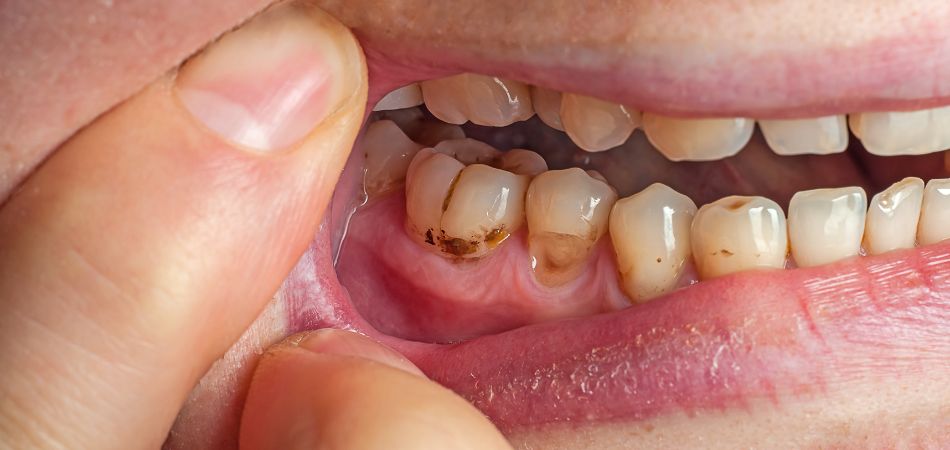
As damage progresses, cavities begin to form. However, methamphetamine tooth decay also happens in unusual locations, such as along the gum line and on the smooth surfaces of the front teeth. These are areas that are not usually affected in people who do not use meth. Gum disease develops, with bleeding, swelling, and early signs of recession. Enamel erosion becomes visible, and teeth may start to look worn or translucent at the edges.
In severe cases, decay advances deep into the tooth structure. Teeth become discoloured, turning brown or black as the damage reaches the inner layers. They may crack or break under normal chewing pressure, or crumble away altogether. Infection can set in, causing tooth abscesses and intense pain. Gum disease can progress to periodontitis, with the destruction of the bone that supports the teeth. The study of 571 users found that 89% showed signs of periodontitis, and 31% had already lost six or more teeth.
Signs of meth mouth
Before the damage has reached serious levels, there are some signs of meth mouth which can show there is a clear problem. The escalating warning signs of tooth decay from drug use involving meth include:
- Persistent dry mouth that doesn’t get better when you drink water
- Multiple cavities that have developed quickly
- Bleeding or receding gums
- Stained or discoloured teeth
- Visible cracks or chips
- Loose teeth
- Persistent bad breath
- Pain or sensitivity that gets worse
- Facial swelling from dental abscesses may develop.
Treating methamphetamine tooth decay
Stopping methamphetamine use halts further progression, but the decay and structural damage that’s already happened won’t reverse on their own and require dental treatment.
Treatment for meth mouth is often complex because so many teeth are affected at once. Rather than a single cavity requiring a filling, a dentist may be dealing with decay in most or all of the teeth at once, each at a different stage.
Abscesses need to be treated before other work can begin, and teeth that might otherwise have been saved sometimes have to be extracted because the infection has spread too far. Where periodontitis has destroyed the bone that holds teeth in place, there are fewer options for replacement. For example, implants require healthy bone to anchor into, and extensive bone loss may mean that dentures are the only realistic option.
Many people delay seeking treatment because they feel ashamed or because they are worried about the cost. While this is understandable, it allows the damage to get worse and makes eventual treatment more difficult. Dental professionals working in addiction and community health services see meth mouth regularly and are not there to judge. Their focus is on stopping the damage and restoring as much function as possible.
Depending on severity, treatment may involve fillings, root canal treatment, crowns, extractions, dentures, or implants. For people with extensive damage, the process can take months and require multiple appointments.
But treatment is possible, and for anyone in recovery, addressing dental health is part of rebuilding overall wellbeing. The best outcome is always to stop meth before the damage becomes severe, but anyone experiencing symptoms should seek dental care wherever they are in their recovery.
Get professional help for methamphetamine addiction
The dental damage described in this article is serious, but it stops progressing once methamphetamine use stops. Getting help for meth addiction itself is what makes recovery possible, for your teeth and for everything else. If you or someone you care about is struggling, UKAT can help. Contact us today to find out more about our meth detox and meth rehab programmes. We can help you quit meth safely, and find the dental care you need.
(Click here to see works cited)
- Murphy, Debra A., et al. “Soda Consumption Among Methamphetamine Users in the USA: Impact on Oral Health.” Oral Health and Preventive Dentistry, vol. 14, no. 3, 2016, pp. 227–234, https://doi.org/10.3290/j.ohpd.a35620.
- Rommel, Niklas, et al. “Sympathomimetic Effects of Chronic Methamphetamine Abuse on Oral Health: A Cross-Sectional Study.” BMC Oral Health, vol. 16, no. 59, 2016, https://doi.org/10.1186/s12903-016-0218-8.
- Shetty, Vivek, et al. “Dental Disease Patterns in Methamphetamine Users: Findings in a Large Urban Sample.” Journal of the American Dental Association, vol. 146, no. 12, 2015, pp. 875–885, https://doi.org/10.1016/j.adaj.2015.09.012.