



Written by:

Medically Reviewed by:
Last Updated:
May 5th, 2026
Drug addiction
What is a drug addiction?
We have all heard of drug addiction, yet if you were asked to explain exactly what it means, the answer might not come so easily. Most people would point to someone who cannot stop taking a substance, but that is only scratching the surface.
A drug addiction is a state where the pull of a drug begins to override choice, slipping from casual use into something that feels necessary just to get through the day. The body can adapt to the presence of the drug, creating tolerance where higher amounts are needed for the same effect.
Alongside this, the mind can start to cling to the relief, escape or rush that the drug brings, until life without it feels almost unbearable. What makes this so difficult is that people often realise the harm long before they are able to stop, leading to a cycle of use that carries guilt, frustration and despair.
For those watching a loved one go through this, it can be painful to see how powerful the hold becomes. For those living it, the battle is not about weakness or lack of willpower but about trying to fight something that has taken root in both body and mind.
Are there different types of drug addictions?
When most people picture drug addiction, they imagine the stereotypical signs we have seen on television or perhaps even witnessed in real life. This usually means someone who shakes, sweats or lashes out when they cannot get hold of the drug. These are the hallmarks of a physical addiction, where the body has become so used to the substance that removing it suddenly creates withdrawal symptoms.
- Opiates like heroin are a clear example, as stopping use often brings severe pain, nausea and overwhelming cravings.
- Alcohol falls into the same category, with withdrawal carrying serious risks if not handled carefully.
The common thread is that the body has adapted to the constant presence of the drug, and taking it away feels like tearing out something it now believes is essential.
Not every addiction looks like this, however, with some drugs not producing such intense physical symptoms but instead creating a pull that is mainly psychological.
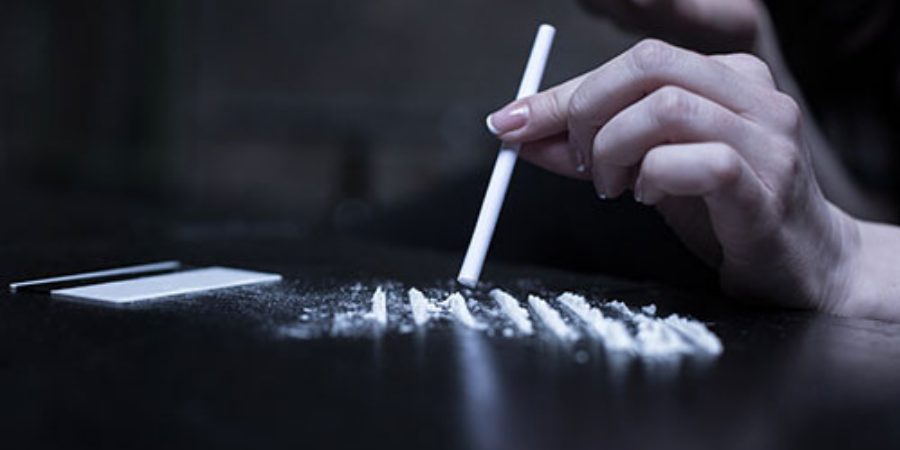
- Cocaine is a prime example, as the withdrawal may not involve physical issues but instead a mind that refuses to settle without the high.
- Cannabis often sits in this group as well, where irritability and disrupted sleep point to the way the brain leans on the drug for relief.
- Even substances that do cause some physical discomfort can be just as damaging when the real trap is in the psychological grip they hold.
In these cases, it is the craving for the mental escape or reward that keeps people coming back, not the fear of physical sickness.
Drug usage in the UK
It’s essential to examine closely the substances being used in the UK and the number of people using them. This does not mean that everyone who takes a drug will develop an addiction, but the first step toward addiction always begins with use. Once we understand the scale of consumption, we can see the potential scope of the problem that could follow.
In 2023, around 8.8% of adults reported using an illicit drug, which equates to almost three million people. Cannabis was by far the most common drug, used by about 6.8% of adults, while powder cocaine, MDMA and hallucinogens each hovered around the 1-3% mark. These figures show that while cannabis leads in terms of volume, harder substances are far from absent.
When broken down further, younger adults between 16 and 24 are significantly more likely to use drugs than older groups, with usage more than double the rate of those aged 25 to 59.
Frequent use, which means taking drugs more than once a month, was recorded at around 1.8% of adults, amounting to over 600,000 people. This group is smaller in number but represents a higher risk of slipping into patterns of dependency.
Common Drug Addictions


Drug treatment statistics in the UK
So now we know how many people are using drugs in the UK, the next step is to see how many of those people have reached the stage of needing treatment. By putting usage data alongside treatment figures, we start to see a clearer picture of addiction in the country.
It is worth remembering that not everyone who struggles with addiction will ever enter drug addiction treatment, so these figures only represent a fraction of the full scale.
- In 2023–24, over 310,000 adults were in contact with drug and alcohol services in England.
- Nearly half of these were seeking help for opiate addiction, which continues to dominate the treatment landscape.
- Alcohol-only cases were the next largest group, making up about 30% of all patients.
- Non-opiate drugs such as cannabis and powder cocaine also made up significant portions of people entering treatment
These numbers underline that while heroin and alcohol remain at the heart of treatment demand, other drugs are steadily pulling people into services as well.
Societal impact of drug addiction in the UK
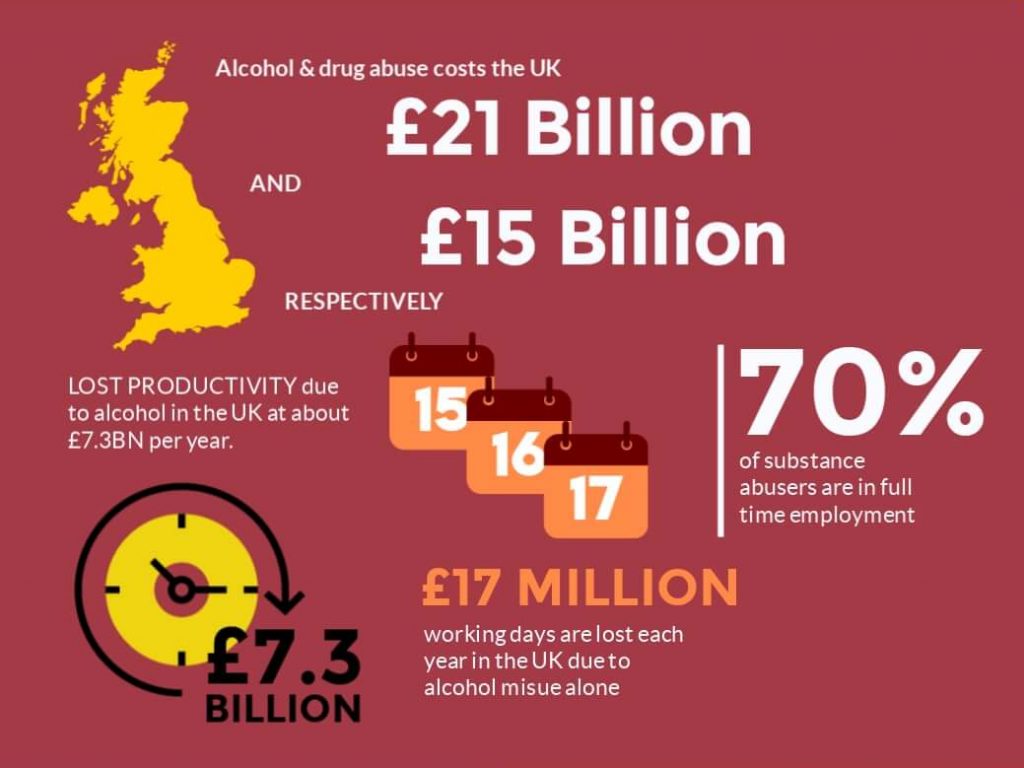
Drug addiction does not stop at the individual but spreads its impact across the whole country. The cost of illegal drugs to society is estimated at around £20 billion a year, a figure that includes the strain on healthcare, policing and wider community services. At the same time, the human cost can be seen most starkly in the rising number of drug-related deaths.
- In 2023, there were more than 5,400 registered drug-poisoning deaths in England and Wales, the highest on record.
- Opiates were involved in almost half of these deaths, while cocaine deaths rose sharply with over a thousand recorded.
- The North East carried the heaviest burden, with rates almost three times higher than London.
- Alcohol also remains a major cause of loss, with nearly 8,000 alcohol-specific deaths in England alone during 2022.
When we put all of this together, the figures show a country that is dealing with a heavy and ongoing toll, both in financial terms and in lives lost.
How can I spot the signs of drug addiction?
Spotting the signs of drug addiction matters because the earlier they are recognised, the sooner something can be done. The challenge is that in the early stages, signs are often easier to cover up. People can disguise habits behind routines, excuses or even humour, which makes it harder for others to notice what is really happening.
That is why educating yourself on what to look out for is one of the best ways to cut through the uncertainty.
- Shifts in weight that do not seem connected to lifestyle changes
- Eyes that look different, whether through redness or unusual pupil size
- Nosebleeds or constant sniffing without a clear explanation
- Declining self-care or an appearance that looks less maintained
- Injuries that are brushed off but keep reappearing
- Ongoing complaints of illness with no medical reason given
- Sudden mood changes that do not fit the situation
- Anxiety or paranoia that feels new or out of character
- Losing interest in hobbies or passions that once mattered
- Struggling to focus, remember details or keep attention steady
- Irritability that appears whenever access to the drug is cut off
- Refusing to talk about use or becoming defensive when asked
- Pulling away from family or long-term friends without explanation
- Missing work, school or commitments with vague reasons
- Money running short often, sometimes with requests to borrow
- Secretive behaviour that raises suspicion about what is being hidden
- Forming new groups of friends while distancing from old ones
- Taking risks that would once have been avoided, even illegal activity
If you notice these signs in yourself, it is worth pausing to reflect on your relationship with the drugs you are using. That reflection can be uncomfortable, yet it has the power to give you real clarity. In the next section, you will find a questionnaire designed to help you look more closely at where you stand.
Do I have a drug addiction?
One of the hardest parts of dealing with drug use is working out whether it has crossed the line into addiction. The truth is that addiction can cloud judgment and make it difficult to be honest with yourself. What starts as something social or experimental can gradually tighten its grip until you only notice once it is already controlling parts of your life. This is why it is important to pause and check in with yourself, even if it feels uncomfortable. A few honest answers can give you clarity on whether your relationship with drugs is heading into dangerous territory.
Ask yourself the following questions:
- Do you find yourself using drugs more often than you originally intended?
- Have you tried to cut down or stop but found it difficult to follow through?
- Do you experience withdrawal symptoms such as anxiety, restlessness or physical discomfort when you stop using?
- Is your drug use affecting work, school or your responsibilities at home?
- Have friends or family expressed concern about your drug use?
- Do you spend a lot of time thinking about, obtaining or recovering from drugs?
If you answered “yes” to any of these, it could be a sign that drug use is becoming something more serious. This is not about labelling yourself but about shining a light on an area of your life that may need attention. Taking the step to acknowledge these patterns is often the beginning of finding a healthier way forward.
Where can I find help for a drug addiction?
If you or someone close to you is dealing with drug addiction, the weight of it can feel overwhelming. It often seems like you are carrying the burden alone, but support is closer than you might think.
At UKAT, we offer dedicated treatment programmes designed to help people facing a wide range of drug addictions. Our centres bring together experienced professionals who understand both the physical and psychological sides of addiction, guiding you through every stage of recovery.
Drug detox, therapy, structure and aftercare all play a part in creating an environment where lasting change becomes possible. What makes the difference is not just entering treatment but knowing you have a team who will stand with you long after the first step has been taken.
Reaching out may feel daunting, yet it can also be the moment you begin to take your life back. If you are ready, UKAT is here.
Frequently Asked Questions
(Click here to see works cited)
- Office for Health Improvement & Disparities. “Adult Substance Misuse Treatment Statistics 2023 to 2024: Report.” GOV.UK, 28 Nov. 2024, www.gov.uk/government/statistics/substance-misuse-treatment-for-adults-statistics-2023-to-2024/adult-substance-misuse-treatment-statistics-2023-to-2024-report.
- Office for Health Improvement & Disparities. “Adult Substance Misuse Treatment Statistics 2023 to 2024: Report.” GOV.UK, 28 Nov. 2024, www.gov.uk/government/statistics/substance-misuse-treatment-for-adults-statistics-2023-to-2024/adult-substance-misuse-treatment-statistics-2023-to-2024-report.
- Committee of Public Accounts. “Reducing the Harm from Illegal Drugs – Committee of Public Accounts.” Parliament.uk, 9 Feb. 2024, publications.parliament.uk/pa/cm5804/cmselect/cmpubacc/72/report.html.
- Office for National Statistics. “Deaths Related to Drug Poisoning in England and Wales.” Ons.gov.uk, Office for National Statistics, 23 Oct. 2024, www.ons.gov.uk/peoplepopulationandcommunity/birthsdeathsandmarriages/deaths/bulletins/deathsrelatedtodrugpoisoninginenglandandwales/2023registrations.

Starting university is one of the biggest changes most people ever make. In a short space of time, you f… More
In 2023, more than 5,500 people in England and Wales died from drug poisoning, the highest number since re… More
Every year, substance misuse contributes to thousands of preventable deaths and medical emergencies acro… More

The relationship between GABA and addiction is central to understanding why it can be so hard to stop dr… More

According to GovUK statistics, the number of people entering ketamine rehab treatment is now 8 times h… More
Naproxen is one of the most commonly used painkillers in the UK. You can buy lower doses over the counter … More
Suffering from an addiction can leave a deep imprint on your body and mind. You may be wondering if the … More

Source: https://www.flickr.com/photos/ashleydangerphotography/20837724532
Liam Payne, a former member o… More
You may have heard of some unusual addictions, like being addicted to being in a relationship or addicte… More

Society has come a long way in recognising and accepting LGBTQ+ people since the 1960s. After several … More

Education is an incredibly powerful force, and it has been shown again and again to be an effective so… More

Heath Ledger's portrayal of the Joker in "The Dark Knight" showcased his extraordinary talent and spotligh… More
The American TV show Breaking Bad (2008 – 2013) was met with widespread public and critical acclaim. T… More

Ever heard of the Rat Park experiment? In the late '70s, psychologist Bruce Alexander set up a fascinating… More

Obtaining trustworthy information can prove challenging for people considering drug rehab or seeking insights into t… More

In the vast world of narcotics, few drugs carry a reputation as foreboding as "Devil's Breath", known … More

The late Matthew Perry was best known for his iconic role as Chandler Bing in the TV series Friends. His… More

Drug use and addiction do not discriminate, and every community, including the LGBTQ+ Community, is affect… More

Addiction can have a relentless grasp on you. The clutches of drug and alcohol abuse lead to isolation… More
Methamphetamine (also known meth for short) is a Class A drug. This means the Advisory Council on the … More
In the early 19th century, a rising literary star bore his soul, revealing the darkest corners of his … More

Football and alcohol share a long and intertwined history within the fabric of British culture. For many p… More
Heroin is one of, if not the most, addictive drugs ever to exist on Earth. It has destroyed countless live… More
Heroin has been among the most feared, deadly, and misunderstood drugs for decades. Movies like Trainspott… More
Scotland's battle against drug deaths has been a long-standing issue, reflecting the nation's larger grapp… More

For many of us, 2023 brings with it an opportunity to reinvent ourselves, casting aside what has passed and establis… More

Last month (February 2022), the Westminster Social Policy Forum keynote seminar w… More
Drug use can have so many negative consequences for the individual, their family, and society as a whole. On… More

Men use drugs more than women. Men get addicted more than women. Drug-related hospital admissions are disproportiona… More