





Last Updated:
October 30th, 2026
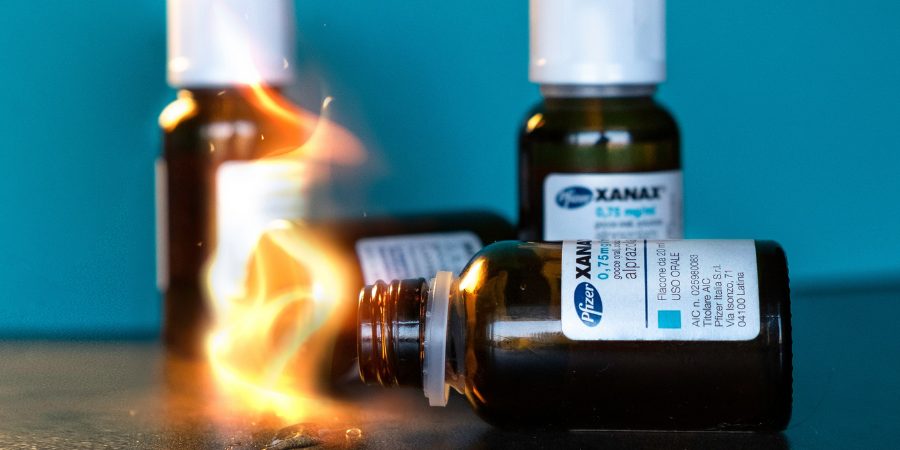
Yes, you can be addicted to Xanax without taking it every day. That’s because addiction isn’t about how often you take a drug or how much you take. The real thing you need to look at is what Xanax’s role is in your life, how you feel when you don’t take it, and if you can’t stop even though you want to. Many people who seek treatment for Xanax addiction don’t take it regularly, but still need professional help to stop.
The difference between tolerance, dependence, and Xanax addiction
The first thing to understand is what Xanax addiction really means. Many people mix up three words that are related, but describe three different problems.
Tolerance means your body and brain have got used to Xanax, so you need more than before to settle your anxiety.
Physical Xanax dependence is your body expecting the drug and going into withdrawal when you don’t take it.
Xanax addiction is the psychological side of dependence, which means Xanax has become how you cope with stress or difficulties in your life. It’s possible to be addicted to Xanax without having a strong physical dependence, and vice versa. However, tolerance usually leads to dependence as doses are pushed up and up, and this greatly increases the risk of a full Xanax addiction.
Why Xanax is so habit-forming
Xanax is the brand name for a benzodiazepine called alprazolam. It works on a brain chemical called GABA, which is the chemical your brain uses to calm itself down. Alprazolam makes GABA work harder, which eases anxiety and can also bring on sleep.
Most treatments for anxiety take weeks to work, but Xanax works in a few minutes. Part of the reason for alprazolam addiction is that if you’re living with anxiety, something that effective can quickly become something you rely on completely.
Benzodiazepines like alprazolam are usually only recommended for a few weeks. In most cases, they should be used alongside longer-term anxiety or sleep solutions like therapy. Even for benzodiazepines, alprazolam is very habit-forming because it works much faster and leaves your body quicker than older, slower benzodiazepines like diazepam. In fact, doctors sometimes use diazepam to wean people off drugs like Xanax rather than stopping cold turkey.
How occasional Xanax use becomes a habit
Occasional Xanax use can escalate because it’s a very effective drug. If Xanax is what gets you on the plane or through a family Christmas, your brain associates Xanax with being able to cope. When you use Xanax to calm yourself down in more and more situations, the brain begins to expect it more and more.
This reinforcement doesn’t mean you need to take Xanax every day, but use does start to increase in most cases. What often happens is you start taking Xanax for things that make you a little anxious too, whereas before it was just for the big things. The more you take, the more tolerant you become to Xanax, and the more you need. After a while, anxiety can become almost your default, and so you need to take Xanax before you do things that you would have dealt with fine before.
The dangers of Xanax withdrawal
Physical benzodiazepine dependence builds with repeated use, whether you’re taking it every day or a few times a week. Once your body expects alprazolam, cutting down or stopping can bring Xanax withdrawal. The common symptoms are anxiety, irritability, poor sleep, sweating, and restlessness. These Xanax dependence symptoms tend to appear between doses first, with the anxiety coming rebounding worse than before. This can just feel like proof that you need Xanax, but some of that anxiety is your body’s reaction to alprazolam leaving your system, not necessarily the old anxiety itself.
The problem is that benzodiazepine withdrawal can be very dangerous. Stopping Xanax when you’re dependent can cause potentially fatal seizures and severe depression. That’s why you should always talk to your doctor or a specialist addiction treatment centre like UKAT’s. In many cases, you will need a medically managed Xanax detox, where you taper your dose in small steps over a few weeks so your brain and body don’t notice the drop. As mentioned above, you may also be switched to a slower benzodiazepine like diazepam to help you withdraw more safely.
The signs of Xanax addiction
The clearest signs of Xanax addiction are behavioural ones. You might take more Xanax than you meant to, or more often than you planned, worry constantly about how much you have left, take your next pill while you’re still calm from the last one, and need more and more all the time just to take the edge off normal everyday things.
As people around you start to become worried, you may start hiding how much Xanax you’re using and lying about how things are really going. When you feel like you need more and more and can’t skip a dose, you may start buying it from even sketchier sources and taking pills that you don’t really know anything about.
One of the simplest definitions of Xanax addiction is to continue taking it despite it causing obvious harm. If you still can’t quit even though your health is being affected, you can’t work or study very well, you’re doing dangerous or illegal things to get Xanax, or your relationships are becoming strained, you need to look seriously at your Xanax use.
The dangers of street Xanax
The NHS doesn’t prescribe alprazolam, so most Xanax in Britain arrives through private prescriptions, friends, or is bought on the street or the internet. That means you can’t know what’s really in a street tablet, and many pills sold as Xanax often contain none of the drug at all. For example, in a police laboratory analysis reported by the charity WithYou, only 15% of tablets sold as Xanax contained alprazolam. This means you could be taking something that has no effect on your anxiety, but is also unpredictably dangerous.
The dangers of mixing Xanax with alcohol or opioids
Xanax, alcohol, and opioids all slow your breathing and your reactions. Together, they make each other’s sedation stronger, which raises the risk of overdose and death. Xanax can also dull your judgement of how sedated you are, so you may re-dose or keep drinking way past the point where you’d normally stop.
Some people stop and go to bed, but their breathing continues to slow and eventually stops altogether. The same can happen with certain sleeping tablets and cold and flu medicines, so you should never mix Xanax with any other substance that causes sedation.
How to get help for Xanax addiction
Xanax recovery starts with an honest look at how much you take, how often, and why you’ve come to rely on it. If you’ve become dependent, coming off safely takes a slow reduction with medical help.
UKAT provides Xanax detox, planned and led by our experienced medical team. This is followed by Xanax rehab with therapy that looks at why the anxiety felt unbearable without Xanax. When you finish treatment, we then provide ongoing support so you can manage anxiety and any other difficulties without needing to rely on Xanax anymore. Contact UKAT today to find out more about our Xanax treatment programmes.
(Click here to see works cited)
- “Benzodiazepines.” Talk to Frank, www.talktofrank.com/drug/benzodiazepines.
- “Benzodiazepine Dependence.” Patient, patient.info/doctor/mental-health/benzodiazepine-dependence.
- Medicines and Healthcare products Regulatory Agency. “Benzodiazepines Learning Module.” MHRA, cpd.mhra.gov.uk/benzodiazepines/CON234573_20.
- “Street Benzodiazepines (Benzos): What’s in Them?” WithYou, https://www.wearewithyou.org.uk/advice-and-information/advice-for-you/street-benzodiazepines-benzos-what-s-in-them