






Written by:

Medically Reviewed by:
Last Updated:
January 30th, 2026
Ketamine use is increasing across the UK, yet many people don’t realise how long ketamine lingers in the body. Even after the high fades, traces of the drug and its by-products remain for much longer than expected.
Knowing how long ketamine stays in your system and what influences the duration can be valuable insight on your journey to complete recovery.
What is ketamine and how does the body process it?
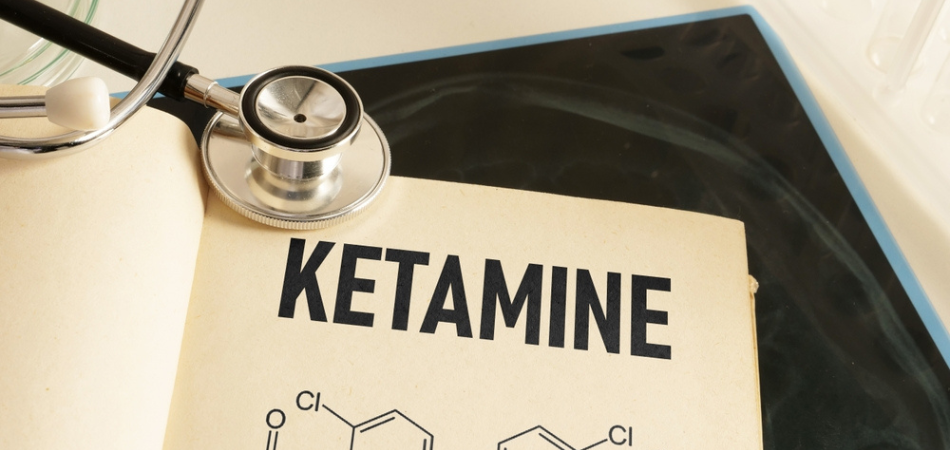
Ketamine is a highly dissociative anaesthetic drug that has a strong effect on perception and mood. Ketamine was originally developed for medical use, namely as a pain reliever and anaesthesia while a person undergoes surgery. More recently, it has also been used in controlled doses as a potential treatment for severe depression and other mood disorders.
Its recreational use remains widespread across the UK. Outside of medical settings, ketamine consumption carries greater risks than many of us realise.
Once taken, ketamine is quickly absorbed into the bloodstream and distributed throughout the body, acting primarily on the central nervous system by blocking NMDA receptors. These are the channels responsible for signals between nerve cells, and the interference disrupts the way your brain normally communicates with the body. The result is a feeling of profound detachment and disorientation.
The liver metabolises ketamine into active by-products such as norketamine, which are then eliminated through urine. While the drug’s immediate effects fade within 30 minutes to an hour, residual traces can remain in the body for several days, influenced by many external factors.
How long does ketamine remain in my system?
If you’ve recently used ketamine, it’s natural to wonder how long it will remain detectable. The answer can depend on the type of drug test used and how much is taken.
Even after ketamine’s psychoactive effects fade, its metabolites can linger in your body for much longer.
Some common detection window includes:
- Blood: Detectable for up to 24 hours after use.
- Saliva: Can remain traceable for 48 hours.
- Urine: Detectable for roughly 2 – 10 days.
- Hair: May be detected for up to 90 days, sometimes even longer in heavy users.
These time frames are only estimates. Detection can vary significantly from person to person.
Which factors affect the duration of ketamine detection?
Everyone’s body processes substances differently, and certain personal and biological factors can extend or shorten the detection window, such as:
What are the effects of ketamine and how long do they last?
Ketamine has an average half-life of around two to three hours, meaning that during this time, the amount of the drug in your bloodstream decreases by half. As this happens, most people will experience a noticeable “comedown,” marked by fatigue, confusion, or low mood as the drug’s effects fade.
Medically, a substance is usually considered cleared from the body after four to five half-lives. For ketamine, this means most of the drug will likely be eliminated from an adult’s system within 10 to 12 hours. However, that doesn’t mean it becomes undetectable. Drug tests can still pick up residual traces depending on the testing method.
Below are the short and long-term effects of ketamine, as well as what to expect if you’re coming off the drug:
- Distorted perceptions: A sense of detachment from your body or surroundings, often described as “dissociation.”
- Visual and auditory hallucinations: Seeing or hearing things that aren’t really there.
- Impaired coordination: Clumsiness, unsteady movements, or loss of balance, especially at higher doses.
- Sensations of tingling and numbness: A temporary loss of sensation of tingling across parts of the body.
- A ‘K-hole’: A unique and deep state of dissociation where you may feel disconnected, immobilised, or out of your own body.
These sensations usually fade within one to two hours, though some symptoms, like confusion or disorientation, can linger for several hours afterwards.
- Bladder damage: Prolonged use can trigger ketamine-induced cystitis, leading to bladder pain and inflammation.
- Problems with memory and concentration: Some long-term users experience difficulty focusing or retaining new information.
- Mental health deterioration: Extended use may worsen depression and anxiety or cause emotional numbness.
- Increased tolerance: Over time, larger doses are needed to feel the same effects, increasing the risk of ketamine dependence.
- Relationship and work issues: Addiction is likely to strain personal connections and impair your daily responsibilities.
With each repeated use, addiction entrenches itself further, with each attempt to quit causing uncomfortable withdrawal symptoms.
- Urges and cravings: Persistent urges and thoughts of taking the drug again.
- Waves of depression: Cyclical depression can manifest in feelings of emotional flatness or detachment when not using the drug.
- Restlessness and anxiety: Inner tension and heightened irritability come with a constant sense of unease.
- Sleep disruption: One of the most important factors in overall health is quality sleep, which is disrupted and impaired.
- Low motivation and fatigue: Mental and physical exhaustion will make daily tasks that used to feel easy more challenging.
These symptoms can last from several days to a few months, depending on how long and heavily you have used ketamine. With professional help, withdrawal becomes safer and more manageable, reducing the risk of relapse.
Where can I get help with addiction recovery?
If you’re worried about ketamine use, whether it’s your own or someone close to you, help is here. Recognising that a problem exists is a powerful first step. With the right support, recovery is within your reach.
At UKAT, we specialise in medical detox, including ketamine detox and personalised therapy designed to address both the physical and emotional drivers of addiction. Our ketamine rehab treatment programme is tailored to your needs, with structured aftercare included as part of our comprehensive treatment pathway, to help you stay strong long after treatment ends.
You don’t have to face this alone. Reach out to UKAT today and take the first step toward stability, strength and a future free from addiction.
(Click here to see works cited)
- “Ketamine Statistics UK 2025: Facts, Figures & Trends.” Priory, www.priorygroup.com/addiction-treatment/ketamine-addiction-treatment/ketamine-use-statistics
- Ketamine: A Rising Star in Mental Health Treatment | Anxiety and Depression Association of America, ADAA, adaa.org/learn-from-us/from-the-experts/blog-posts/consumer-professional/ketamine-rising-star-mental-health
- Zhang, Youyi, et al. “Structural Basis of Ketamine Action on Human NMDA Receptors.” Nature News, Nature Publishing Group, 28 July 2021, www.nature.com/articles/s41586-021-03769-9.
- Mion G, Villevieille T. Ketamine pharmacology: an update (pharmacodynamics and molecular aspects, recent findings). CNS Neurosci Ther. 2013 Jun;19(6):370-80. doi: 10.1111/cns.12099. Epub 2013 Apr 10. PMID: 23575437; PMCID: PMC6493357.