





Last Updated:
April 6th, 2026
Diazepam, commonly sold as Valium, is a prescribed medication, so some people may not think of it as a dangerous drug. Similarly, alcohol is just part of normal life for many people in Britain. But diazepam is a benzodiazepine, one of the most powerful classes of drugs prescribed in the UK. When you mix alcohol and benzodiazepines, the alcohol makes the pills more powerful, and the pills make the alcohol more powerful. Both substances target the same system in your brain, so when alcohol and diazepam combine, things can go wrong very quickly.
What diazepam does inside your body
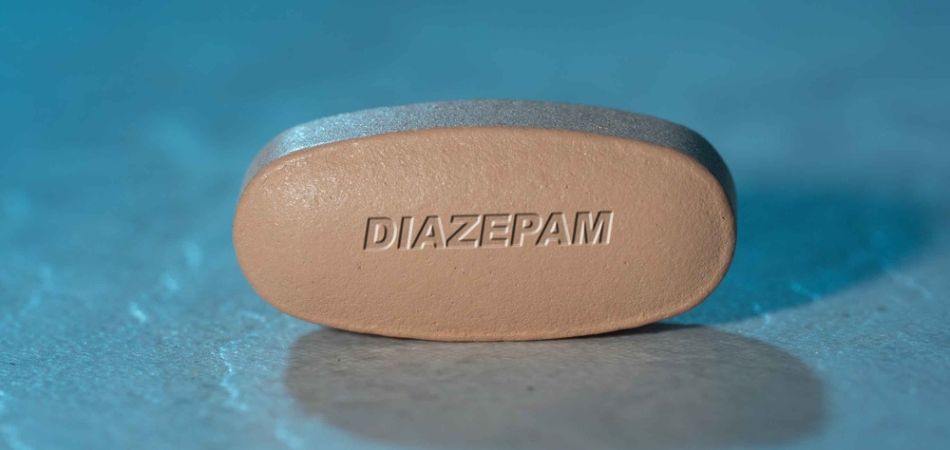
Diazepam works by boosting GABA, a chemical in your brain that acts a bit like a braking system. When GABA activity increases, your brain activity slows, which is why diazepam calms anxiety, relaxes muscles, and is used in conditions like seizures and alcohol withdrawal. At the prescribed dose, diazepam side effects are manageable, and you are sedated to a degree that you can handle safely.
What diazepam also does, however, is slow down your central nervous system, including your breathing, reflexes, and coordination. Again, at the prescribed dose on its own, your body can usually handle this. The problem begins when you take too much or add another substance that does exactly the same thing.
What alcohol does inside your body
Alcohol works on GABA in the same way that diazepam does. It boosts GABA activity and slows brain function, which is why your coordination and judgment get worse, and also why a few drinks make you feel calmer and more relaxed. It is the same basic mechanism as a prescribed tranquilliser, just less precisely dosed and without a doctor monitoring what happens.
Your liver metabolises both alcohol and diazepam, but when you drink, it prioritises clearing the alcohol first. That means diazepam clears more slowly than usual and stays in your system at higher levels, so its effects are much stronger than they would normally be.
Why mixing diazepam and alcohol is so dangerous
The key danger for anyone taking diazepam and alcohol together is that they work on the same receptors in the brain. And when they do that, the effects are not just added together, but multiplied. This means your central nervous system slows down more than you would expect from either substance on its own, and more than you may realise is happening at the time.
The most serious risk is respiratory depression, where your breathing becomes slower and shallower, and your brain gets less oxygen. In serious cases, this can lead to unconsciousness, coma, or death. This can happen while you are asleep or already drowsy, without any major warning signs. In some cases, people only feel a little sleepy and then don’t wake up again.
This is not a risk that only applies to large amounts of alcohol. Even one glass of wine or beer can make the sedation noticeably worse. The threshold varies between people, with body weight, age, liver function and current dose all playing a part, but no amount of alcohol is clearly safe when you are taking diazepam. That is why the safe medication use guidance that comes with every diazepam prescription says to avoid alcohol entirely.
Other risks of mixing diazepam and alcohol
The increased overdose risk is not the only problem that mixing diazepam and alcohol poses.
The combined sedative effects also put you in danger of falls and accidents, particularly if you’re an older adult. It is also why you should never drive while taking diazepam, and adding alcohol makes driving even more dangerous.
Memory gaps are also common. Both diazepam and alcohol, on their own, can cause anterograde amnesia, where you don’t form memories of events when under the influence. Together, whole periods of time can disappear entirely, and this can also make it hard to remember how much you’ve taken or drunk. That can greatly increase overdose risk.
Confusion and disorientation are also common diazepam side effects that alcohol worsens considerably. If you are already anxious or distressed, this can become frightening and potentially dangerous very quickly.
Nausea and vomiting are also more likely with the combination. If you are heavily sedated or asleep, there is even a risk of choking to death on vomit.

Signs that something has gone wrong
If you or someone with you has mixed diazepam and alcohol, and you notice any of the following, call an ambulance or go straight to the hospital:
- Breathing that is slow, shallow, or irregular (especially fewer than twelve breaths per minute)
- Lips or fingertips that look bluish or pale
- Severe confusion
- Non-responsiveness
- Loss of consciousness
When you speak to the doctor or paramedic, tell them what has been taken and, if you know, roughly how much. While waiting, put anyone unconscious on their side with their head tilted back to keep their airway open.
Never leave someone who has mixed alcohol and diazepam to sleep it off. The combination is one of the most common causes of drug-related death in the UK, and many of those deaths happen while the person is asleep and is wrongly assumed to be okay. Breathing can quickly deteriorate after you leave the room, so keep checking on them and be ready to call for help if anything changes.
Regularly mixing diazepam and alcohol
There are people who know they are not supposed to drink while taking diazepam, but do it regularly anyway. There are different reasons for this, but the dangers are always the same, no matter why you are doing it.
In some cases, people drink diazepam because it makes them feel more drunk or high. Other people use alcohol to boost the effects of diazepam on anxiety or stress. The problem starts when it becomes a pattern and stops working as well as it used to. This is called tolerance, and it is a big milestone on the path to addiction. When you start needing more alcohol or diazepam to feel good or sedate yourself, increasing the amounts can create physical dependence, withdrawal symptoms, and full alcohol or diazepam addiction.
Once addicted, the chances of you misjudging how much you can safely take increase enormously. In 2024, 629 people died in England and Wales from causes involving benzodiazepines. The majority of drug poisoning deaths involve more than one substance, and alcohol is among the most commonly found alongside them.
UKAT addiction support for alcohol and diazepam addiction
If you are taking diazepam regularly and struggling to avoid alcohol, or if your use of either has become difficult to manage, it could be down to addiction. UKAT treats both alcohol and benzodiazepine addiction, and the two sometimes need to be dealt with together.
If you have been drinking heavily for a long time or taking diazepam for a while, stopping suddenly is dangerous. Alcohol and benzodiazepine withdrawal can cause seizures and other dangerous symptoms, which can even be life-threatening. A medical reduction, done gradually at a pace matched to your situation, is the safest way to come off both diazepam and alcohol.
As part of our complete treatment pathway for addiction, UKAT provides medical detox alongside residential rehab, addressing the underlying causes of addiction, followed by ongoing aftercare and alumni support to help you stay on track.
If something feels harder to manage than it should, contact UKAT today. Professional help can be the difference between recovery and a tragedy for yourself and your loved ones.
(Click here to see works cited)
- Office for National Statistics. “Deaths Related to Drug Poisoning in England and Wales: 2024 Registrations.” ONS, 17 Oct. 2025, https://www.ons.gov.uk/peoplepopulationandcommunity/birthsdeathsandmarriages/deaths/bulletins/deathsrelatedtodrugpoisoninginenglandandwales/2024registrations.
- Office for Health Improvement and Disparities. “Adult Substance Misuse Treatment Statistics 2024 to 2025: Report.” GOV.UK, 4 Dec. 2025, https://www.gov.uk/government/statistics/substance-misuse-treatment-for-adults-statistics-2024-to-2025.
- Soyka, Michael, et al. “Long-Term Use of Benzodiazepines in Chronic Insomnia: A European Perspective.” Frontiers in Psychiatry, vol. 14, 2023, article 1212028, https://doi.org/10.3389/fpsyt.2023.1212028.