





Last Updated:
February 27th, 2026
If you have been prescribed nitrofurantoin for a urinary tract infection, you may be wondering whether it’s safe to drink alcohol during your treatment. The short answer is that while there’s no dangerous chemical reaction between the two, drinking while taking nitrofurantoin can still worsen side effects and potentially slow your recovery.

What is nitrofurantoin?
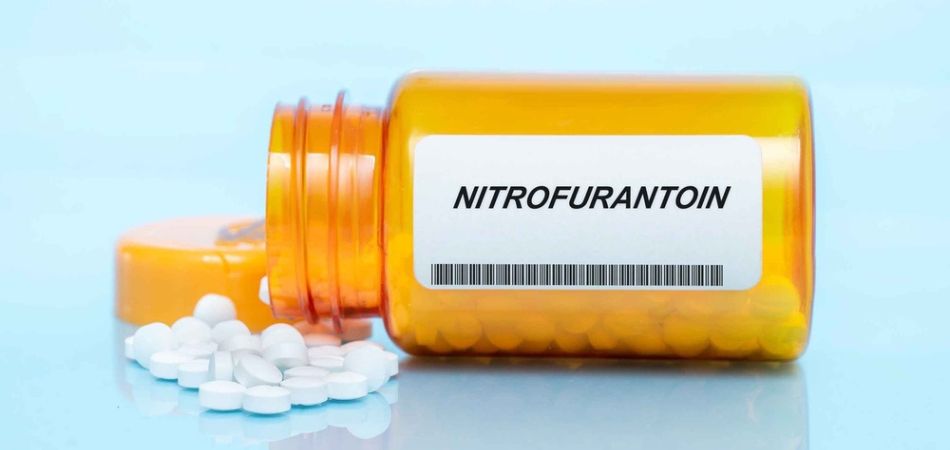
Nitrofurantoin is an antibiotic prescription drug used to treat urinary tract infections (UTIs). It has been in use since the 1950s and remains one of the most commonly prescribed treatments for bladder infections. Common brand names for nitrofurantoin include Macrobid and Macrodantin.
Nitrofurantoin works by killing the bacteria responsible for infection in the urinary tract. Unlike some antibiotics that spread throughout the body, nitrofurantoin concentrates specifically in the urine. This makes nitrofurantoin effective for bladder infections but unsuitable for kidney infections or infections elsewhere in the body.
A typical course of nitrofurantoin lasts between three and seven days. Common side effects include:
- Nausea
- Headache
- Dizziness
- Harmless changes in urine colour (it may appear darker yellow or brownish)
- Stomach discomfort
- Diarrhoea
Is there a direct interaction between nitrofurantoin and alcohol?
For many years, nitrofurantoin was believed to cause a disulfiram-like reaction when combined with alcohol. Disulfiram is a medication used in alcohol dependence treatment that causes unpleasant symptoms like flushing, nausea, and rapid heartbeat if someone drinks while taking it. Some antibiotics, such as metronidazole, can produce similar effects.
However, more recent research has shown this concern to be unfounded when it comes to nitrofurantoin. A systematic review examined the evidence behind alcohol warnings for common antibiotics and concluded that nitrofurantoin can be used without a specific chemical interaction. The NHS confirms that there is no known direct interaction between alcohol and nitrofurantoin.
This means that drinking alcohol won’t stop nitrofurantoin from working, and it won’t trigger an immediate toxic reaction in most people. But this doesn’t mean mixing the two is a good idea.
Why drinking alcohol during treatment is still problematic
Even without a direct drug interaction, alcohol can interfere with your recovery in several ways. Understanding these effects can help you make informed decisions during your treatment.
Alcohol also irritates the stomach lining and affects digestion. If you’re already experiencing gastrointestinal discomfort from nitrofurantoin, adding alcohol into the mix is likely to make things more unpleasant.
This irritation can also make it harder to tell whether your infection is improving or getting worse, which is important when you’re monitoring your response to treatment.
When you’re dehydrated, your urine becomes more concentrated. Concentrated urine is more irritating to an already inflamed bladder and can create an environment where bacteria find it easier to survive. That is why staying well hydrated is one of the most basic and effective things you can do to support UTI recovery. Alcohol works against this.
This effect isn’t limited to heavy or long-term drinking. According to the Alcohol and Drug Foundation, drinking five to six standard drinks in a single session can suppress immune function for up to 24 hours. Even moderate drinking during an active infection can slow your body’s ability to clear the bacteria causing your UTI.
People with existing liver conditions should be especially cautious and should speak with their doctor before consuming any alcohol during treatment.
How long should you avoid alcohol?
There is no official guidance specifying exactly how long to abstain, but most healthcare professionals recommend avoiding alcohol for the entire course of treatment and for at least 48 to 72 hours after finishing. This allows nitrofurantoin to clear your system and gives your body time to recover without additional strain.
If you’re unsure, ask your pharmacist or GP for advice specific to your situation.
What to do if you’ve already had a drink
If you have consumed alcohol while taking nitrofurantoin, don’t panic. As noted above, there is no dangerous chemical reaction between the two. Monitor how you feel, stay hydrated by drinking plenty of water, and continue taking your medication as prescribed. If you experience severe symptoms or feel unwell, contact your doctor or pharmacist for guidance.
The most important thing is to complete your full course of antibiotics. Stopping early, even if you feel better, increases the risk of the infection returning or becoming resistant to treatment.
How to support your recovery
While taking nitrofurantoin, there are several things you can do to support your recovery and reduce discomfort:
- Drink plenty of water throughout the day: This helps flush bacteria from the urinary tract and keeps urine diluted, reducing irritation.
- Take the medication with food: Nitrofurantoin is better absorbed when taken with a meal, and eating can also reduce the likelihood of stomach upset.
- Avoid other bladder irritants: Caffeine, citrus juices, and spicy foods can all aggravate UTI symptoms. Cutting back on these during treatment may help you feel more comfortable.
- Rest when you need to: Your body is working hard to fight an infection. Giving it adequate rest supports the healing process.
When does drinking during treatment indicate a larger problem?
For most people, avoiding alcohol for a few days while treating a UTI is straightforward. However, if you find it difficult to stop drinking even for a short period, this may be worth paying attention to. Difficulty abstaining from alcohol when there’s a clear medical reason to do so can be an early sign that your relationship with drinking has become problematic.
This doesn’t necessarily mean you have an alcohol addiction, but it may suggest that alcohol has taken on a larger role in your life than you previously realised. If this has made you stop and think, speaking to someone about your drinking habits could be a helpful step.
Getting help from UKAT
If you’re concerned about your alcohol use, whether because you’ve struggled to stop drinking during a course of medication or for any other reason, we can help. Our team offers confidential support and can talk through your options, from advice and information to residential treatment programmes for addiction.
You don’t need to be in crisis to reach out. Sometimes the most important conversations happen when you first start noticing that something isn’t quite right.
(Click here to see works cited)
- Mergenhagen, K.A., et al. “Fact versus Fiction: A Review of the Evidence behind Alcohol and Antibiotic Interactions.” Antimicrobial Agents and Chemotherapy, vol. 64, no. 3, 2020. https://pmc.ncbi.nlm.nih.gov/articles/PMC7038249/
- Sarkar, D., Jung, M.K., and Wang, H.J. “Alcohol and the Immune System.” Alcohol Research: Current Reviews, vol. 37, no. 2, 2015, pp. 153-155. https://pmc.ncbi.nlm.nih.gov/articles/PMC4590612/
- Alcohol and Drug Foundation. “Understanding Alcohol and Our Immune System.” https://adf.org.au/insights/alcohol-immune-system/