





Last Updated:
August 19th, 2026
Few parts of detox catch people off guard quite like the sweating. You can soak through a shirt sitting still in a cool room, or wake in sheets that need changing. Perspiration during drug or alcohol detox is one of the most common withdrawal symptoms, and one of the most wearing. But it’s not a sign that something has gone wrong. It’s your body’s own control system working overtime as it adjusts to life without the substance. Understanding why it happens makes it easier to cope with and to know when it is telling you something serious.
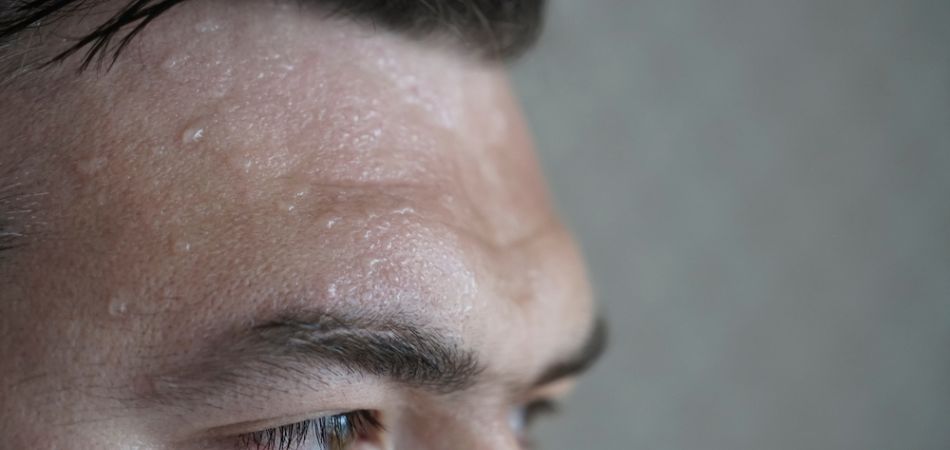
Why your body sweats so much in withdrawal
Your body keeps itself steady through the autonomic nervous system. This is the network that runs all the jobs you never have to think about, including your heartbeat, blood pressure, and temperature. When you have been dependent on alcohol or dependent on drugs for a while, the brain adapts to having it there and resets its idea of normal around it. Take the substance away, and that careful balance tips, producing symptoms like sweating.
Alcohol, opioids and sedatives each drive it
With alcohol and sedatives, the mechanism is well understood. Alcohol and drugs like benzodiazepines boost a calming brain chemical called GABA. After heavy use, the brain dials its own GABA down and turns its excitatory signalling up to compensate. Remove the alcohol or sedatives and that dampening vanishes, leaving your nervous system racing. Your sweat glands are part of what gets driven hard, which is why the perspiration can be so heavy. This shared mechanism is why alcohol and benzodiazepine withdrawal can look so alike and carry similar dangers.
Opioid withdrawal reaches the same place by a different road. When the opioids leave your body, a part of the brainstem floods the body with noradrenaline. This is the chemical behind fight or flight. That surge brings the classic picture of opioid withdrawal, with sweating, goosepimples, yawning, a streaming nose and wide pupils.
Opioid withdrawal is rarely life-threatening in itself, but it carries real risks all the same, from the dehydration that heavy sweating and vomiting cause to the danger of overdose if someone relapses once their tolerance has dropped. The experience has often been likened to a severe bout of flu, miserable to sit through and hard to face without support, even though there is usually no fatal danger from the withdrawal alone.
How long the sweating lasts
When the sweating comes and how long it lasts usually follows a rough pattern. With alcohol, it tends to begin within hours of the last drink, climbs over the first day or two, and reaches its worst around the third day before slowly settling.
The timing for opioids depends on the drug, starting within hours for short-acting ones like heroin and later for longer-acting ones. One detail catches many people out. The sweating rarely comes alone
Because all of this springs from one overexcited system, detox sweating is rarely a lone symptom. Depending on the substance, you may also experience a racing heart, tremors, anxiety, depression, high blood pressure, insomnia, restlessness, and chills, even while sweating profusely.
These detox side effects all come from the same engine running too fast. Physical symptoms including sweating generally flare and ease together, though psychological ones can last much longer.
When heavy sweating signals something more serious
Most people who come off alcohol have a rough but manageable time of it. More than half of those dependent on alcohol feel the effects of withdrawal when they stop, and for the majority these stay at the milder end. A minority, though, move into severe territory, and the sweating is one of the things that hints at how far the autonomic system has been pushed.
Among people going through alcohol withdrawal, hallucinations affect around 2%, while approximately 3% to 15% develop delirium tremens, the most dangerous form of alcohol withdrawal.
Delirium tremens bring drenching sweats together with seizures, confusion, fever and a dangerously high heart rate, and it can be fatal without treatment. If you or someone else experiences heavy sweating paired with confusion, a high fever, or a racing pulse, it is a medical emergency, and you should seek professional help right away.

Easing the discomfort safely
While the risks of detox need proper expert care, there are gentle things that can make the sweating more bearable.
Dehydration is one of the biggest risks in withdrawal from opioids and other substances. Staying hydrated throughout detox is critical because you can lose a lot of fluid through sweating.
Light, loose cotton clothing and bedding let the heat escape, so it is not trapped against the skin. Changing out of soaked clothing and bedding quickly keeps you from chilling once the sweat cools.
A cool, airy room also helps, as does a quick wash or a damp flannel on the back of the neck when a wave passes.
None of this is a substitute for proper care, and they work best as part of a medically supported detox, never as a reason to attempt one alone.
Why detoxing under medical care matters
The sweating you can see is the surface of something happening much deeper. That is why safe withdrawal management is about far more than mopping a brow. Sweating is a symptom of the racing nervous system and chemical imbalance that causes withdrawal. And from the outside, there is no reliable way to tell a rough-but-safe detox from one tipping towards danger.
With a medical detox, that guesswork is taken away. Staff can track your symptoms and withdrawal management steps can be taken early, with care adjusted the moment the picture starts to change.
There are tools like the CIWA-Ar, a ten-item scale that measures symptoms including sweating. A high score flags an early risk of seizures or delirium tremens before they happen. For coming off opioids, the equivalent is the COWS, an eleven-item scale that rates signs including sweating to gauge how severe things are becoming.
Those steps include fluids to counter what you are losing, medication to calm the overactive system, and counsellors and therapists on hand to provide emotional and psychological support. For alcohol and sedatives, where withdrawal can become dangerous, this safety net can genuinely be the difference between life and death. For opioids, it guards against the dehydration and the relapse risk that make an unsupervised attempt both risky and likely to fail.
We are here when you are ready
If you are facing alcohol or drug detox, or watching someone you love face it, you do not have to manage the sweating or other symptoms on your own. At UKAT, our medically supervised detox gives you a safe and supported place to come through withdrawal, with experienced staff looking after both your comfort and your safety from the first day to the last. When you feel ready to talk, reach out to us, and we can walk you through how detox with us works and what to expect.
(Click here to see works cited)
- Canver, Bethany R., et al. Alcohol Withdrawal Syndrome. StatPearls Publishing, 14 Feb. 2024, National Center for Biotechnology Information, www.ncbi.nlm.nih.gov/books/NBK441882/.
- “Clinical Opiate Withdrawal Scale (COWS).” National Institute on Drug Abuse, National Institutes of Health, nida.nih.gov/sites/default/files/ClinicalOpiateWithdrawalScale.pdf.
- Rahman, Abdul, and Manju Paul. Delirium Tremens. StatPearls Publishing, 14 Aug. 2023, National Center for Biotechnology Information, www.ncbi.nlm.nih.gov/books/NBK482134/.
- Shah, M., and Martin R. Huecker. Opioid Withdrawal. StatPearls Publishing, 21 July 2023, National Center for Biotechnology Information, www.ncbi.nlm.nih.gov/books/NBK526012/.