






Written by:

Medically Reviewed by:
Last Updated:
August 10th, 2026
If you’ve ever taken an ibuprofen before heading out for the evening or reached for one the morning after to deal with a headache, you’ve probably wondered whether mixing the two is something you should be worried about.
It’s a fair question, and the answer is more nuanced than most health websites make it sound.
The real risk depends on what’s happening inside your body when the two meet.
This page breaks down exactly what ibuprofen does, why alcohol interacts with it the way it does and where the line sits between a manageable risk and a genuine danger.
What ibuprofen does to your body
Millions of people take it every day, but not many truly understand how it works on the body to give the effects it does.
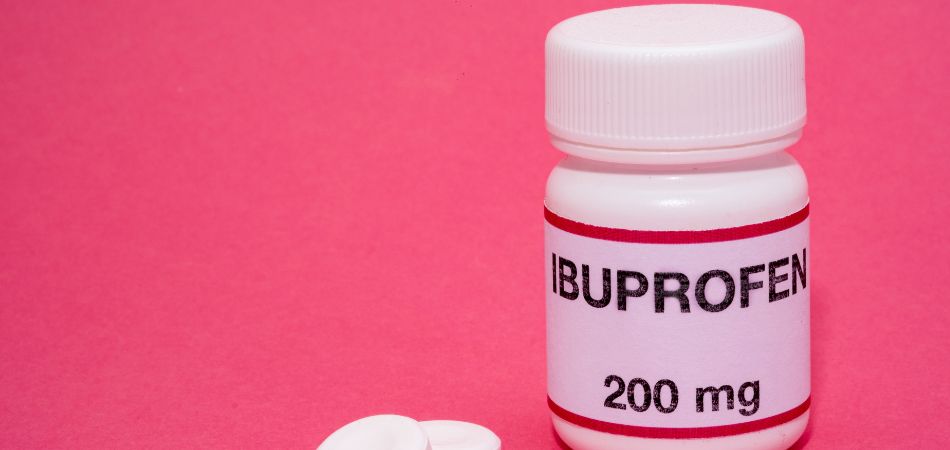
Ibuprofen is a non-steroidal anti-inflammatory drug, commonly referred to as an NSAID. The NHS describes it as a medicine used to treat pain, reduce inflammation and bring down a high temperature.
It works by blocking enzymes called COX-1 and COX-2, which produce substances called prostaglandins, and it’s the reduction of these prostaglandins that makes the pain and swelling go away.
Sources also state that prostaglandins play a protective role in maintaining the stomach’s mucosal barrier and supporting blood flow to the kidneys. When ibuprofen blocks prostaglandin production, those protective functions are reduced at the same time as the pain relief kicks in.
This is where the alcohol interaction starts to matter, because alcohol independently attacks the same systems that prostaglandins are designed to protect. This means the defence mechanisms are being undermined from two directions at once.
What happens when you mix ibuprofen and alcohol
The risks of combining ibuprofen and alcohol are concentrated in three areas of the body, and understanding what’s happening in each one helps explain why this combination deserves more caution than most people give it.
Research that tracked over 1,200 patients found that regular ibuprofen use roughly tripled the risk of major upper gastrointestinal bleeding in people who consumed alcohol.
But it’s worth noting that occasional ibuprofen use in occasional drinkers did not produce an increase in risk.
In a healthy, well-hydrated person, prostaglandins play a relatively minor role in kidney function. But when your body is dehydrated, they become the kidneys’ main line of defence by dilating the blood vessels that supply the kidneys and keeping filtration running when blood volume drops.
Alcohol is a diuretic, meaning it makes you urinate more than you take in, which reduces your blood volume. This is exactly the state where your kidneys depend on prostaglandins to function properly, and taking ibuprofen in that state removes the defence mechanism they’re relying on.
Clinical case reports have documented acute kidney injury in young, otherwise healthy adults after binge drinking combined with NSAID use, with one case reaching dangerously elevated creatinine levels before recovering with rehydration.
Other sources state that NSAIDs should be avoided for patients with liver dysfunction, including dysfunctions caused by alcohol abuse.
Severe reactions like jaundice, liver necrosis, hepatic failure and types of hepatitis have been reported.
Who is most at risk
The combination of ibuprofen and alcohol carries a different level of risk depending on who you are and what else is going on with your health.
Heavy or chronic drinkers face the highest risk across all three organ systems because the stomach lining is already under sustained attack from alcohol, and adding regular NSAID use on top of that pushes the gastrointestinal bleeding risk.
Older adults are more vulnerable because kidney and liver function decline with age, meaning both organs are less able to tolerate the additional stress that the combination places on them.
People with pre-existing kidney disease, liver conditions, heart failure or high blood pressure face increased risk because these conditions already compromise the systems that ibuprofen and alcohol affect. Anyone who is dehydrated, whether from exercise, illness or a heavy night of drinking, is in the state where the kidney risk is at its highest.

How long should you wait between the two
The NHS does not give a specific waiting period between ibuprofen and alcohol.1 Ibuprofen has a plasma half-life of roughly two hours, meaning a standard dose is largely cleared from the bloodstream within about ten hours in a healthy adult.
Spacing ibuprofen and alcohol apart by several hours is a sensible precaution if you’re using ibuprofen occasionally. But if you’re taking ibuprofen regularly for an ongoing condition, the more important conversation is with your GP about whether it’s the right painkiller for your situation, especially if alcohol is a regular part of your life.
What it might mean if you’re finding it hard to avoid alcohol
Most people reading this page will be here because they took ibuprofen and then had a drink or the other way around and wanted to check whether that was a problem. For the majority, the answer is that occasional overlap at low levels is unlikely to cause harm.
But if you’re taking ibuprofen for a genuine medical reason and finding it difficult to go without alcohol for even a short period, that’s worth sitting with for a moment. Not being able to skip a few drinks while you’re on medication can be an early indicator that your relationship with alcohol has moved beyond casual use.
You don’t need to have a definitive answer to that question right now. But if it’s something you’ve been noticing, speaking to someone about it is a reasonable next step.
How UKAT can help
If anything on this page has raised questions about your drinking, UKAT can help you make sense of where things stand. Our team understands that recognising a problem with alcohol is rarely straightforward and that most people don’t arrive at that conclusion overnight.
UKAT provides residential addiction treatment across the UK, with medically supervised detox (alcohol detox or prescription drug detox, depending on your addiction), structured therapy and aftercare planning designed to help you understand what’s behind the drinking and build the foundation for lasting change.
If you’d like to talk through your situation, contact UKAT today. The conversation is confidential and there’s no obligation.