



Spotlight on Cocaine: Insight, Statistics and Guidance
Christmas is a time that is often filled with parties, reunions, and late nights, but behind the sparkle of celebration, it can also be a time when cocaine use quietly rises. Often glamorised in popular culture or brushed off as a “social” drug, cocaine carries serious risks that can quickly spiral out of control.
This Christmas, we are shining a spotlight on cocaine, offering a wealth of insights, from expert perspectives and statistics to cost comparisons and key signs of addiction.
Understanding Cocaine and Its Impact
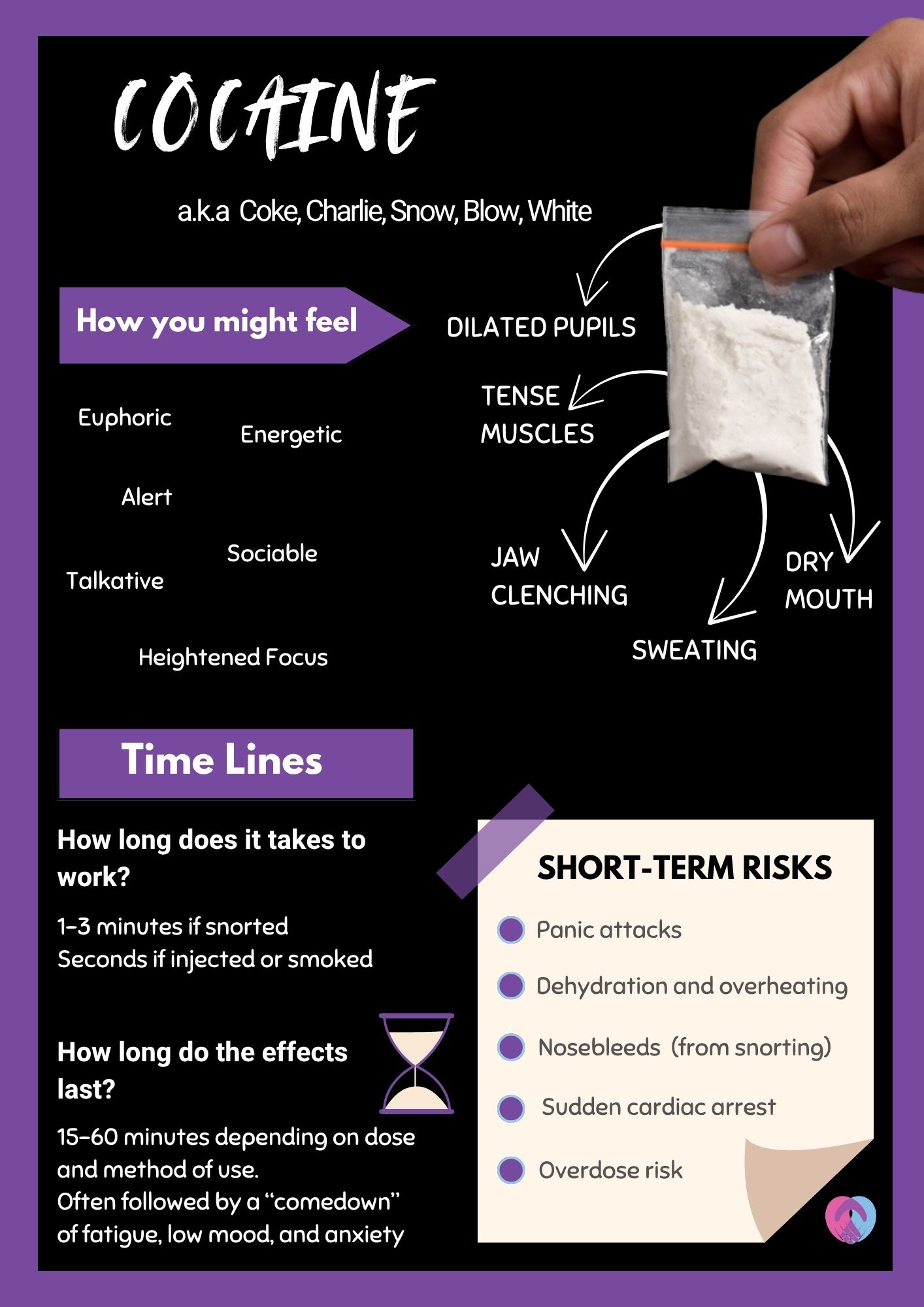
Cocaine is a powerful stimulant that affects the central nervous system, producing short bursts of energy, confidence, and euphoria. It floods the brain with dopamine, the chemical responsible for pleasure and reward, creating a rush that can feel irresistible.
But the high doesn’t last. When the effects wear off, users often experience exhaustion, anxiety, irritability, and depression. This crash can drive repeated use, trapping individuals in a cycle of dependence that can be hard to break.
Physically, cocaine use increases heart rate and blood pressure, constricts blood vessels, and reduces oxygen flow to vital organs. Regular use raises the risk of heart attack, stroke, and respiratory failure. Nasal use can cause severe damage to the nose and sinuses, while smoking or injecting cocaine comes with additional dangers, including infection and overdose.
Beneath its image as a “party enhancer,” cocaine is a highly addictive drug with the potential to destroy health, relationships, and financial stability. Recognising this reality is the first step toward taking back control.
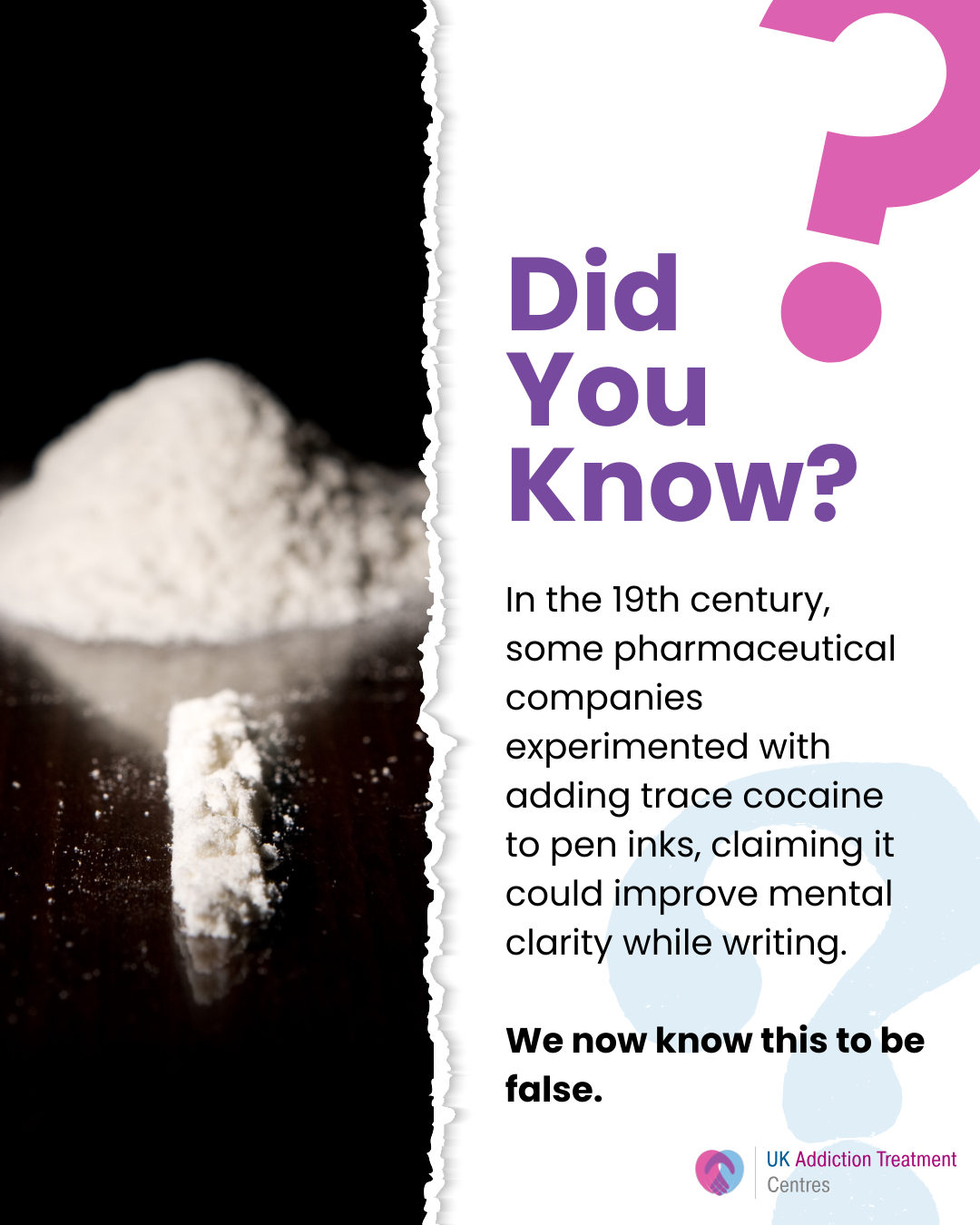
Did You Know This About Cocaine?
The Financial and Emotional Cost of Cocaine Use
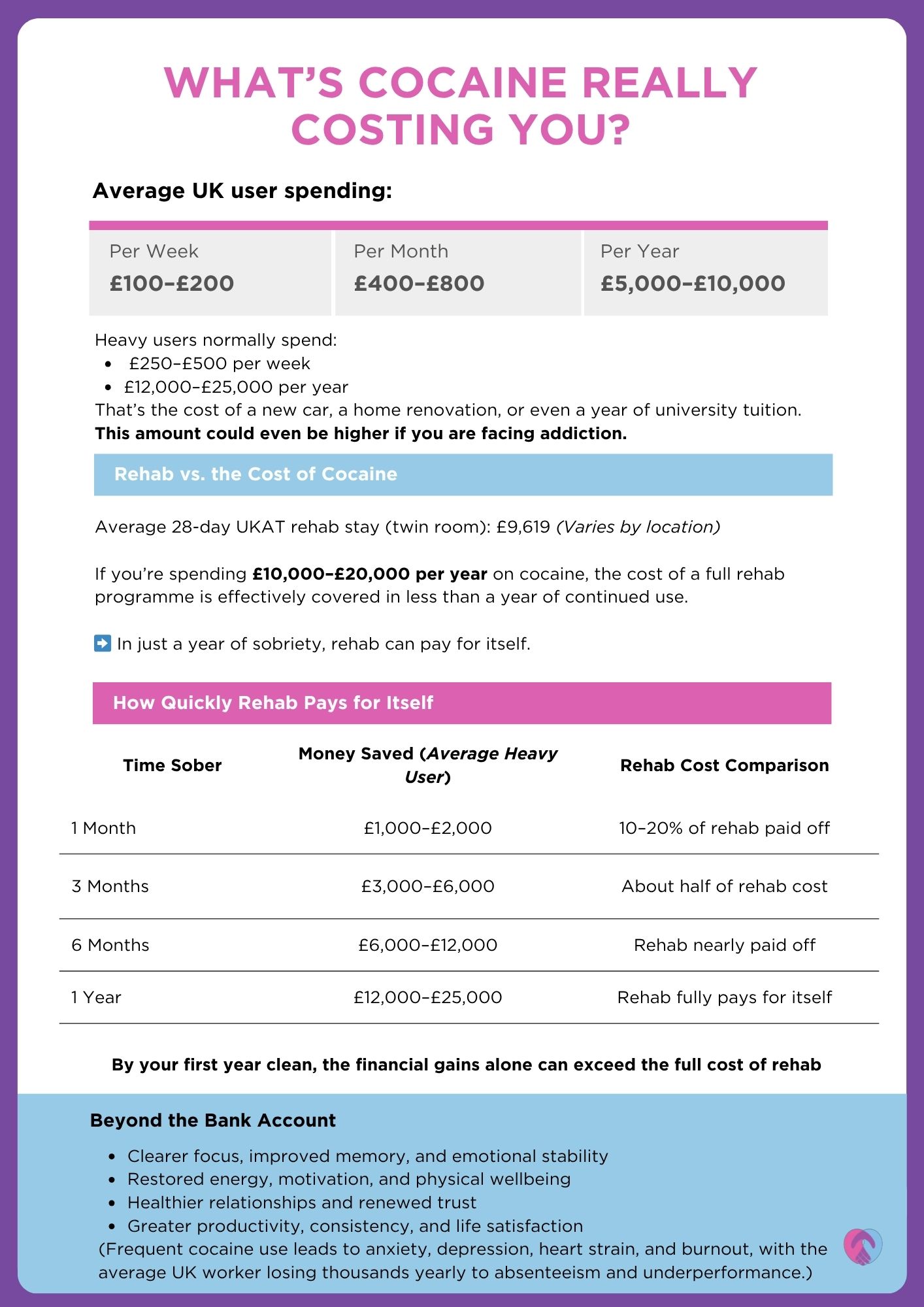
Cocaine is one of the most expensive recreational drugs on the market, and its cost adds up quickly. What begins as occasional use can turn into a costly habit that drains savings, damages careers, and fractures families.
Beyond the financial toll, there’s an emotional cost; strained relationships, secrecy, guilt, and shame. Many users report feeling trapped between the temporary escape cocaine provides and the mounting anxiety, paranoia, and depression that follow.
Seeking professional help might seem daunting or expensive, but the truth is stark: the cost of addiction far outweighs the cost of recovery. Investing in treatment is an investment in your health, future, and peace of mind.
What is the True Cost of Cocaine?
Why Christmas Is a Risk Period for Cocaine Abuse
The festive season can heighten the risk of cocaine abuse for a number of reasons:
- Social Influence: Parties and nightlife often normalise cocaine use. The pressure to join in can make refusal feel awkward or isolating.
- Stress and Fatigue: Between financial strain, family pressures, and long work hours, some turn to cocaine for an artificial boost of energy or confidence.
- Escapism: For those feeling lonely or overwhelmed, cocaine can seem like a shortcut to confidence and connection, but it often leaves users feeling emptier once the high fades.
Understanding how these seasonal pressures can lead to increased use helps individuals plan ahead and stay mindful of their choices during the holidays.
Cocaine Facts
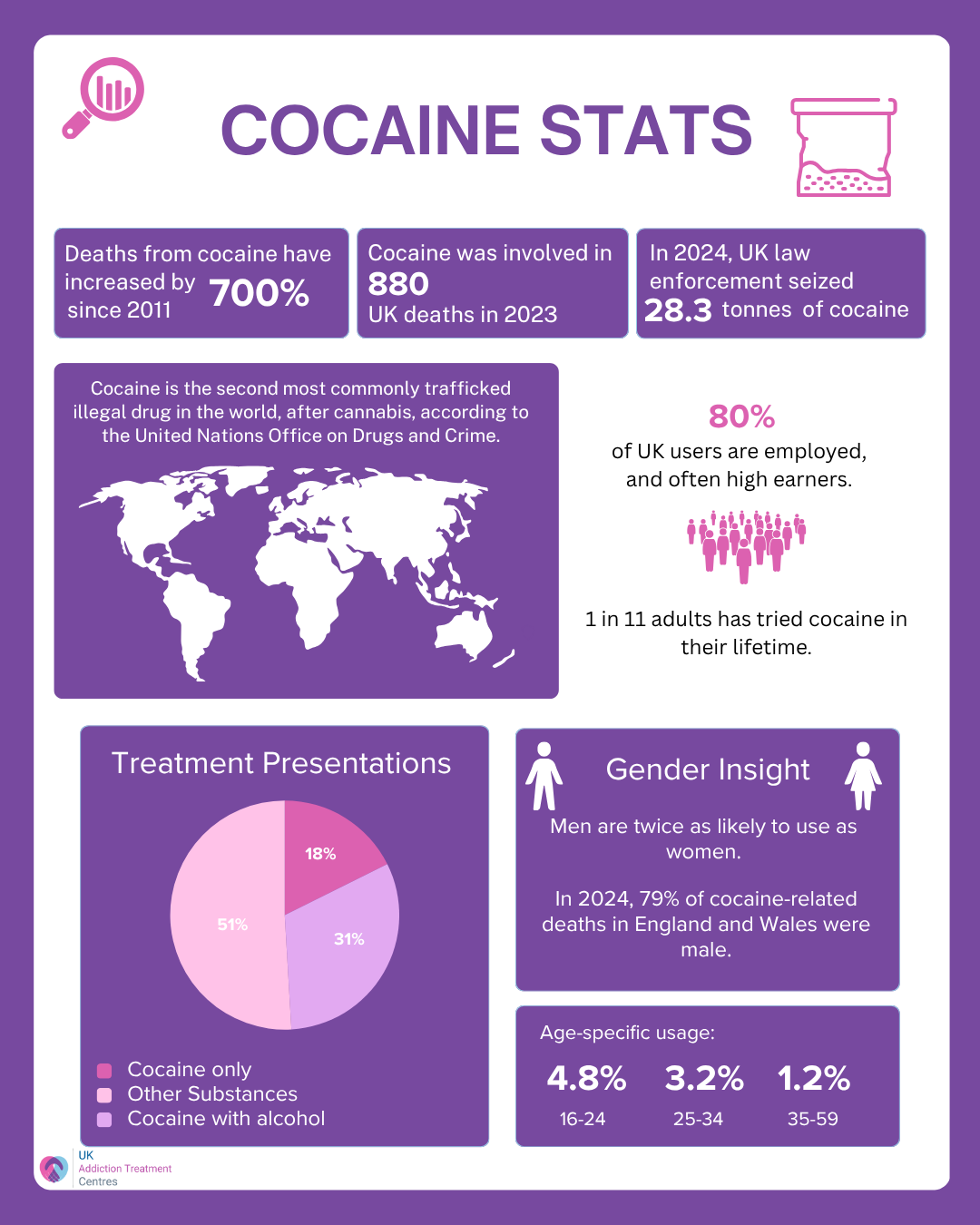
Cocaine Statistics
Recognising the Risks of Cocaine Addiction and How UKAT Can Help
Cocaine addiction can develop faster than many realise. The drug’s intense psychological pull creates a powerful cycle of craving and reward. Over time, the brain becomes less responsive to natural pleasure, making it harder to feel motivated or happy without using cocaine.
Signs of addiction can include:
- Increased tolerance (needing more to feel the same effect)
- Neglecting responsibilities or relationships
- Mood swings, paranoia, or insomnia
- Financial or legal problems linked to drug use
If you recognise these signs in yourself or someone close to you, professional help is essential.
At UKAT, we offer specialist support for cocaine addiction, combining medical care, therapy, and aftercare to promote lasting recovery.
Our full treatment pathway for ecstasy rehab includes:
- Inpatient Rehab: Structured cocaine detox and therapy in a safe, supportive environment with round-the-clock care.
- Tailored Treatment Plans: Primary and Secondary Treatment Programmes designed to address both the drug addiction and the underlying emotional or psychological issues that fuel it.
- Aftercare and Alumni Networks: Continued counselling, peer support, and recovery groups to help maintain sobriety long after leaving treatment.
Cocaine addiction is treatable. With the right guidance, many people go on to rebuild successful, healthy, and fulfilling lives.
Practical Tips For Avoiding Cocaine Use for a Safer Festive Season
Whether you’re in recovery, cutting down, or navigating social situations where cocaine may be present, these strategies can help:
- Set Boundaries: Decide in advance what situations you’ll avoid and who you’ll spend time with.
- Seek Support: Surround yourself with people who respect your choices, and reach out if you’re struggling.
- Stay Grounded: Manage stress through healthy outlets like exercise, sleep, or mindfulness rather than artificial highs.
- Recognise Triggers: Be aware of emotional or situational triggers that make you more likely to use.
- Plan an Exit: If temptation arises at an event, have a reason ready to leave and a safe place to go.
Even small, consistent actions can make a big difference in maintaining control and protecting your wellbeing.
Cocaine Addiction Symptoms

Be Aware of the Dangers of Cocaine This Christmas
Cocaine doesn’t just take a toll on the body, it reshapes people’s lives, often in quiet and devastating ways. But recovery is always possible.
This December, choose awareness over impulse. Choose health over habit. And if you or someone you love is struggling, know that help is closer than you think.
UKAT is here to provide confidential, compassionate support through every stage of recovery, don’t wait to get the help you need.
Use this page to explore facts, expert insights, statistics, and guidance. And remember, seeking help is always an option. One conversation, one appointment, or one small change can make a lasting difference.