



Spotlight on Ecstasy: Insight, Statistics and Guidance
Christmas and New Year celebrations often bring together music, friends, and a sense of freedom, but they can also be times when drug use, including ecstasy, becomes more common. While many associate ecstasy with parties and club culture, it’s important to understand that behind its reputation as a “feel-good” or “social” drug lies a complex web of risks that can affect both body and mind.
This Christmas, we are shining a spotlight on ecstasy, offering a wealth of insights, from expert perspectives and statistics to cost comparisons and key signs of addiction.
Understanding Ecstasy and Its Impact
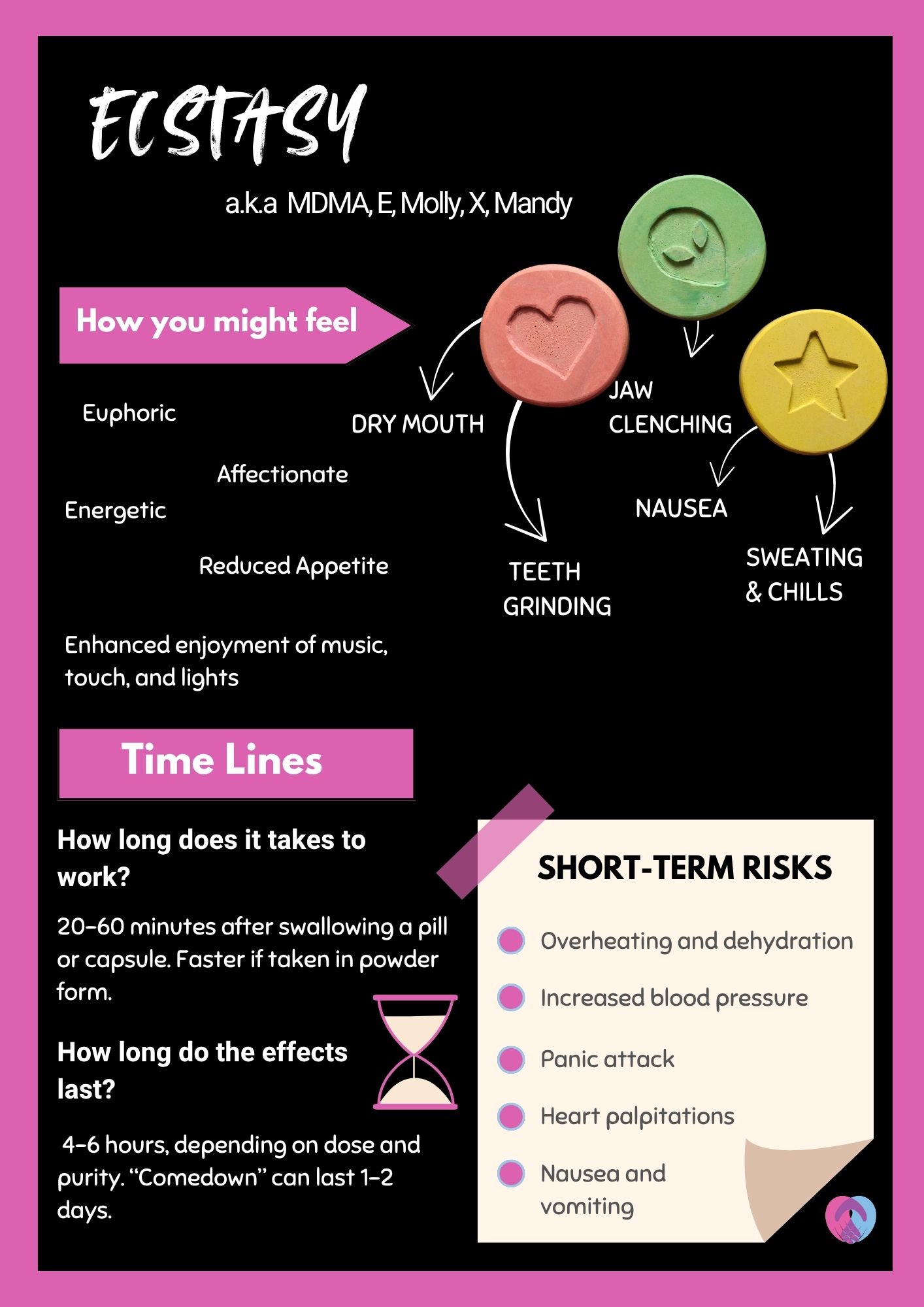
Ecstasy (also known as MDMA) is a synthetic drug that alters mood and perception. It increases levels of serotonin, dopamine, and norepinephrine in the brain (the chemicals that regulate mood, pleasure, and energy). Users often experience temporary euphoria, empathy, and heightened sensory perception.
But what’s often overlooked is how quickly the “high” can be followed by an emotional crash. As serotonin levels plummet, users can experience anxiety, depression, fatigue, and irritability for days afterwards. Physically, ecstasy increases heart rate, blood pressure, and body temperature, sometimes to dangerous levels. Overheating, dehydration, and heart complications are among the most serious risks, especially during prolonged dancing or physical activity.
Repeated use can cause long-term changes to brain chemistry, leading to memory problems, mood disorders, and an increased risk of dependency. And because ecstasy tablets or powders are often mixed with other substances, users rarely know exactly what they’re taking, increasing the overall danger.
Recognising ecstasy for what it truly is, a potent psychoactive drug with real risks, is the first step in protecting yourself or someone you care about.
Did You Know This About Ecstasy?
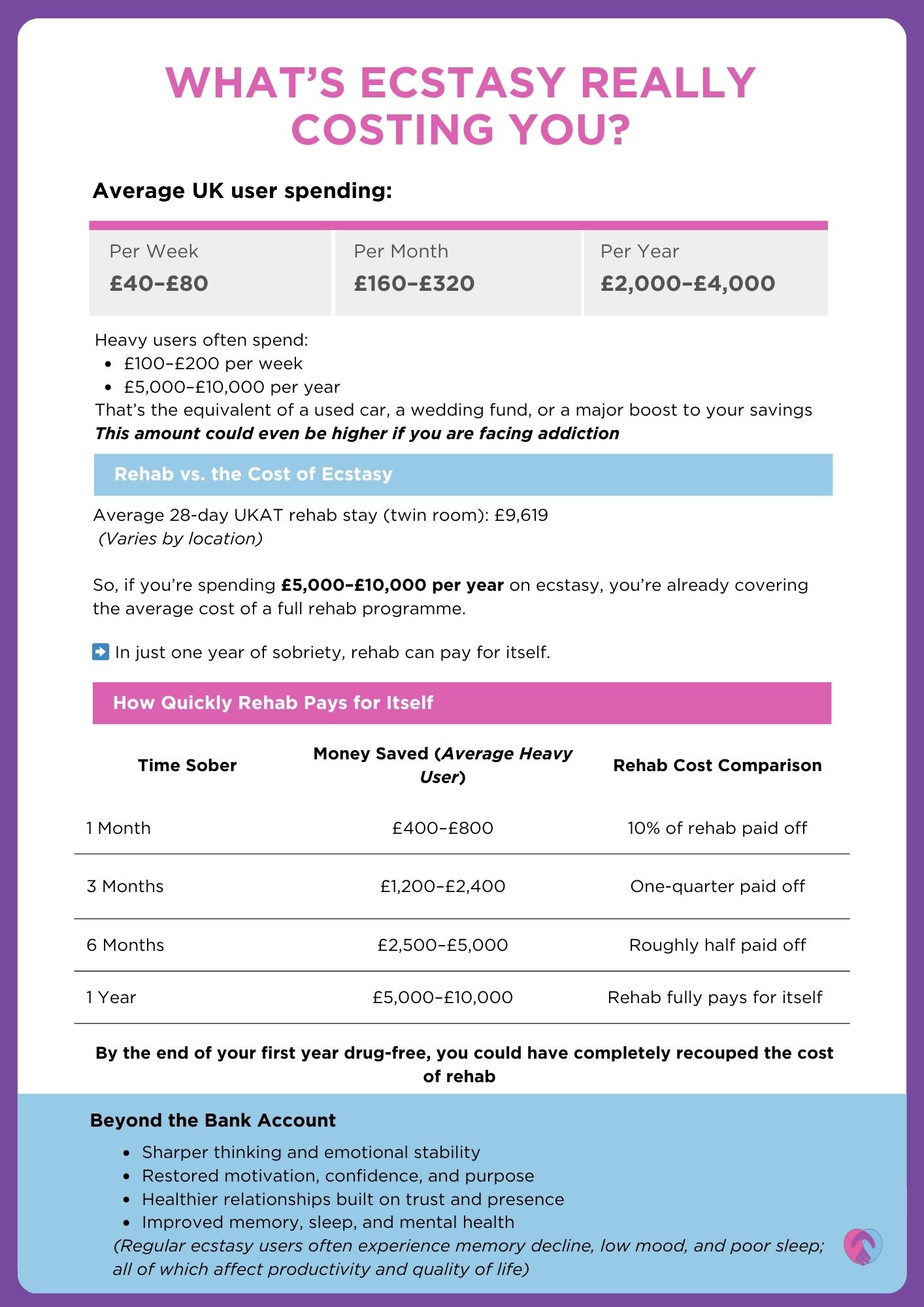
The Financial and Emotional Cost of Ecstasy
While ecstasy may seem like a cheap way to “have a good time,” its costs extend far beyond the price of a pill. Regular use can lead to ecstasy dependency, physical exhaustion, and poor mental health, all of which can affect work performance, relationships, and overall wellbeing.
There’s also a hidden financial burden: medical bills from hospitalisation, legal costs if caught in possession, and lost income due to the physical and psychological effects of regular use.
By contrast, investing in professional help, through detox, therapy, or residential rehab, can lead to a more stable, fulfilling, and financially secure life. Recovery isn’t just about quitting drugs; it’s about reclaiming control, focus, and purpose.
What is the True Cost of Ecstasy?
Why Christmas Is a Risk Period for Ecstasy Abuse
The festive season can be a high-risk time for ecstasy use, particularly among young adults and those in social circles where drugs are present. Several factors contribute to this:
- Social Environment: Parties, clubs, and festivals often normalise recreational drug use. The atmosphere can make it harder to say no or recognise limits.
- Emotional Escape: For those struggling with stress, loneliness, or mental health challenges, ecstasy can seem like an easy escape, but it often deepens emotional lows once the effects wear off.
- Peer Influence: The fear of missing out or wanting to “join in” can drive experimentation, particularly when others appear to be having fun without visible consequences.
Understanding these triggers can help individuals make safer choices and approach the festive season with more self-awareness and resilience.
Ecstasy Facts
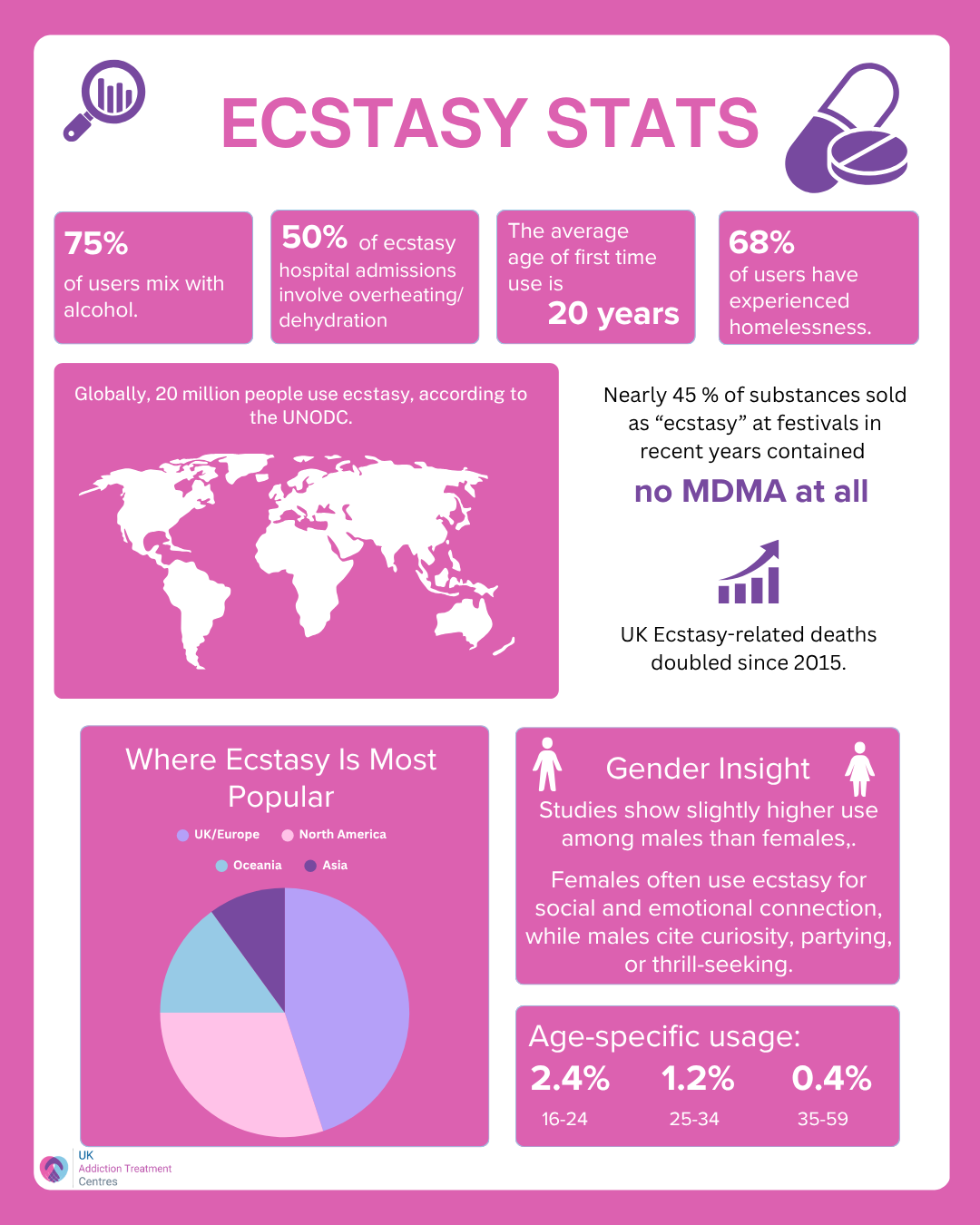
Ecstasy Statistics
Recognising the Risks of Ecstasy Addiction and How UKAT Can Help
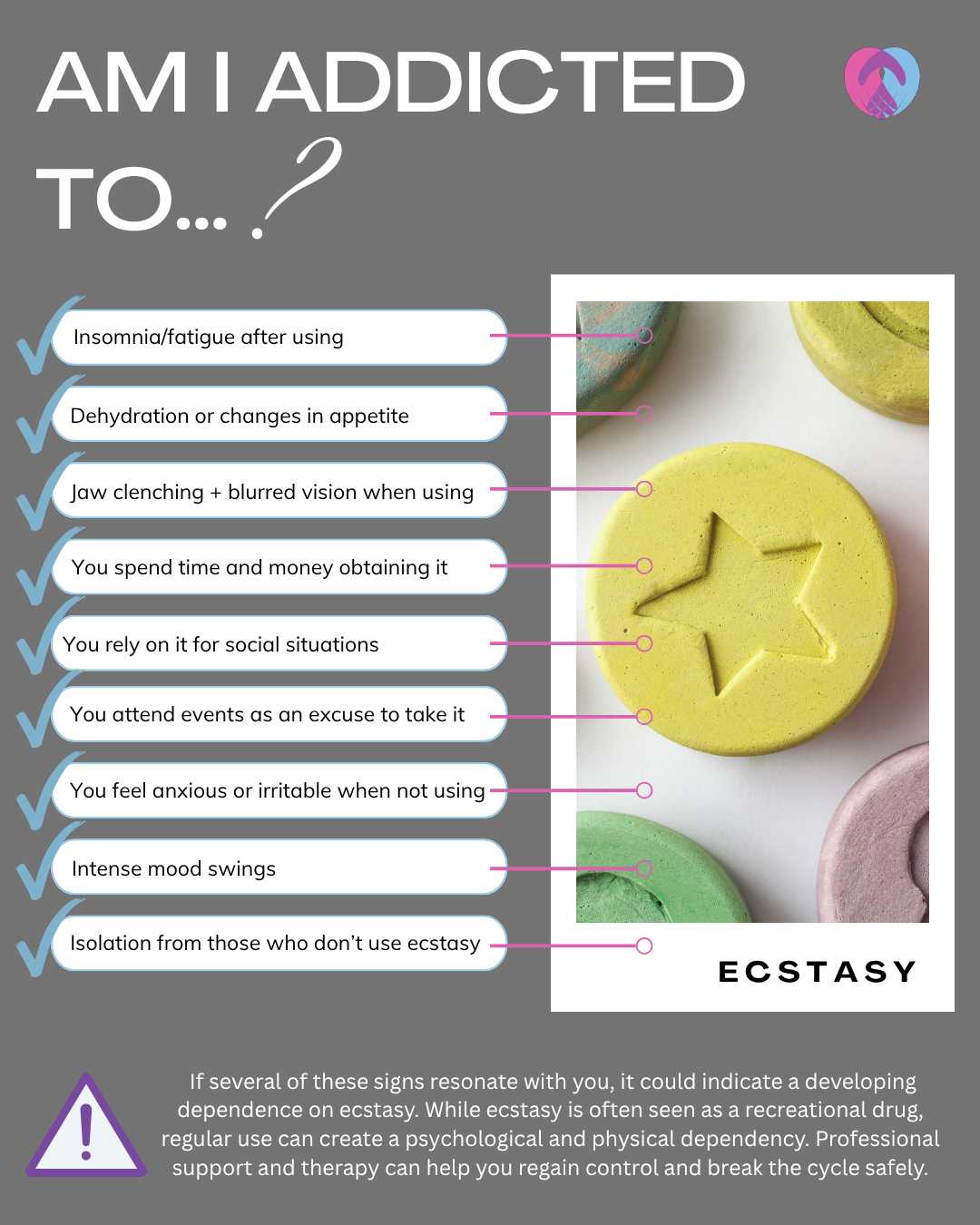
While ecstasy is not always associated with physical addiction, psychological dependence can develop quickly. The desire to recreate the euphoric high or cope with emotional lows can trap users in a damaging cycle.
Ecstasy addiction affects far more than the user; it impacts families, friendships, and futures. Recognising early warning signs such as mood swings, neglecting responsibilities, increased tolerance, or cravings is crucial.
UKAT provides comprehensive support for anyone struggling with ecstasy or other drug use.
Our services include:
- Inpatient Ecstasy Rehab Programmes: Structured residential care in safe, supportive environments, combining ecstasy detox, therapy, and holistic treatments tailored to each individual.
- Aftercare and Alumni Support: Continued access to counselling, peer groups, and recovery resources to maintain progress after your primary rehab programme.
- Confidential Advice and Assessment: Our admissions team offers free, compassionate guidance to help determine the most appropriate treatment path.
Recovery is possible. With the right support, individuals can overcome dependency, rebuild confidence, and rediscover a life free from the shadow of substance use.
Practical Tips Around Ecstasy Use for a Safer Festive Season
Whether you’ve used ecstasy before or are simply navigating environments where it’s present, awareness and preparation can make all the difference:
- Know the Risks: Understand what you’re taking and how it affects your body. Knowledge is the best defence.
- Stay Hydrated, but Not Excessively: Sip water regularly, especially when dancing, but avoid overhydration, which can be equally dangerous.
- Take Breaks and Rest: Overheating is a serious risk; step away from crowded dance floors and cool down frequently.
- Look Out for Friends: If someone seems unwell, dizzy, overheated, confused, or vomiting, seek medical help immediately.
- Reflect on Your Habits: If using ecstasy has become a regular part of social life, it may be time to speak to someone.
You don’t need to face these challenges alone. Opening up about drug use and seeking guidance is a sign of strength, not failure.
Ecstasy Addiction Symptoms
Be Aware of the Dangers of Ecstasy This Christmas
Christmas should be about connection, joy, and celebration; not risk and regret. By understanding the realities of ecstasy, you can make informed decisions that protect your wellbeing and future.
If you or someone you know is struggling with ecstasy use or any form of addiction, UKAT is here to help. Our professional team offers confidential, compassionate support designed to guide you toward long-term recovery.
Use this page to explore facts, expert insights, statistics, and guidance. And remember, seeking help is always an option. One conversation, one appointment, or one small change can make a lasting difference.